
License Plate Recognition for HOA Gates
A data-driven look at the failure modes the vendor deck won't show you
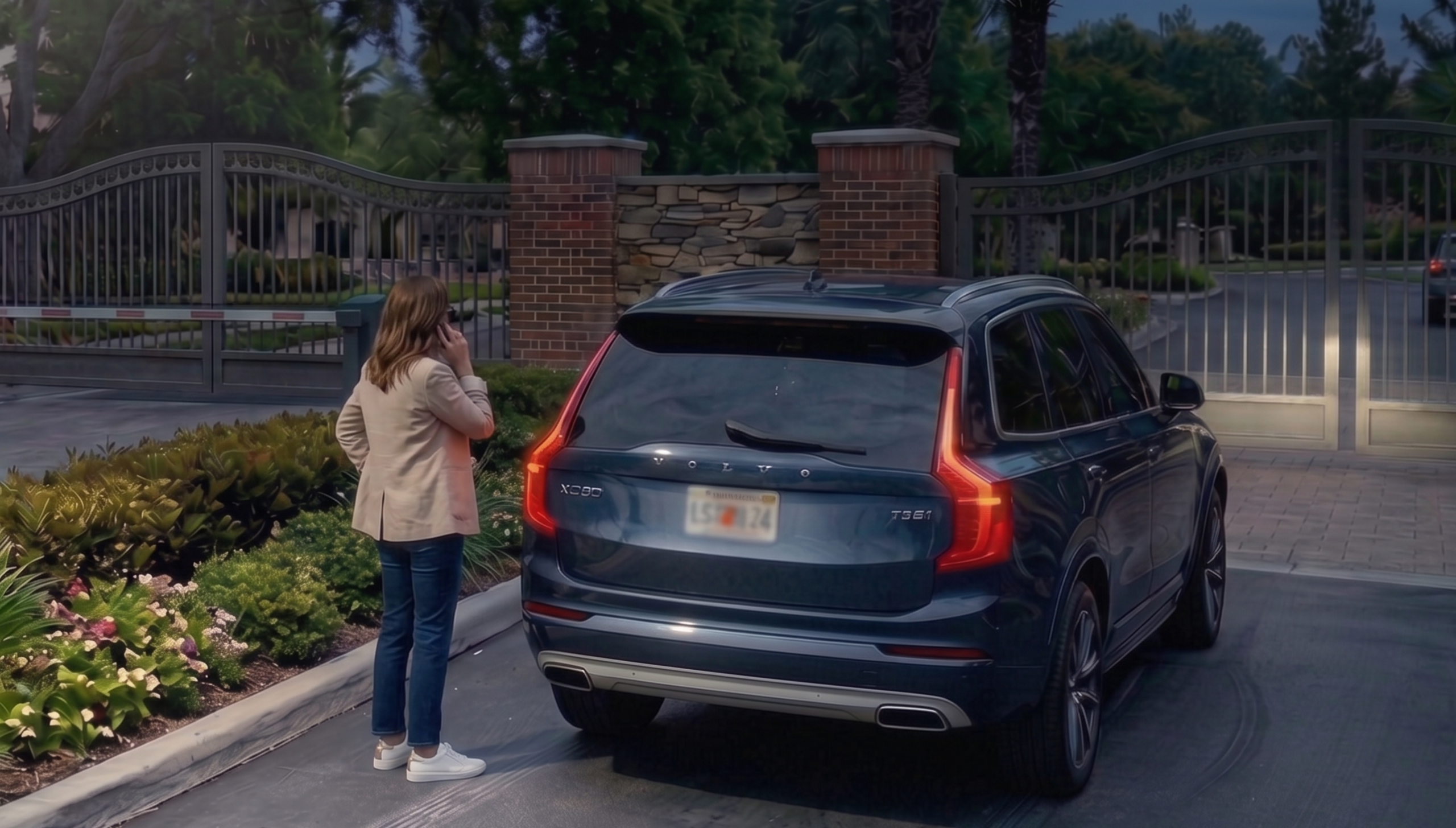
It's a Tuesday night in a 500-home Florida community. A resident pulls up to her own gate for the 412th time this year. The camera scans her plate. The gate doesn't open.
Nothing's wrong with her plate. It's just not her plate. Her SUV is in the shop getting a transmission repair, and the loaner the dealership gave her isn't in the community's LPR database. The camera the board installed last fall, which replaced a working barcode reader, has never seen this plate before. So it doesn't open. She calls the guardhouse. Nobody answers at 9:47 p.m. She waits twelve minutes until a neighbor pulls up behind her, their plate reads fine, and the gate finally opens.
License plate recognition sells like magic and performs like weather. HOA boards are being pitched LPR as the next generation of community access, usually without seeing the data behind it. Here's what that data actually says.
What LPR Is (and Why It Keeps Failing)
An LPR camera takes a photo of a vehicle at the gate, runs optical character recognition (OCR) on the plate, and matches the guess against a database. If the read is right and the plate is on the list, the gate opens. LPR is a probabilistic guess, not a credential. And the guess depends on conditions the community doesn't control.
Seven Ways LPR Fails at Your Gate
1. The Accuracy Numbers Are a Magic Trick
Vendors advertise 95% to 99% accuracy. Those figures describe posed, well-lit, straight-on still images under conditions a residential gate almost never sees. The single most cited real-world accuracy study, a 2018 randomized controlled trial by the Vallejo Police Department, published by the IACP, found 35% misreads on mobile readers and 37% on fixed readers. When researchers tested commercial systems against real moving-vehicle footage, accuracy dropped below 70%.[1]
Run the math on your own community. At 50,000 gate reads a month, even a charitable 5% miss rate is 2,500 failed entries per month. That's the support burden your property manager absorbs, every single day, forever.
2. The Industry Won't Tell You How Well It Works
When LPR vendors advertise 99% accuracy, they're not always lying. They're selectively reporting. Industry vendor Innova Group has conceded on its own blog that LPR manufacturers usually calculate their statistics after discarding images of damaged plates.[2] In plain English: the accuracy number is computed after removing the hard cases.
The pattern extends up the chain. The UK Home Office runs the most mature national LPR network on earth and does not publish a current misread rate. The UK Surveillance Camera Commissioner has publicly acknowledged that misreads are simply "not quantified."[3] IPVM, the leading independent physical security testing outlet, has reported that Flock Safety has repeatedly refused to allow independent testing of its cameras at any price.[4]
If the category's dominant HOA vendor won't let independent reviewers test its hardware, that's not a gap in the data. It's a choice.
3. Any Tiny Thing Can Mess It All Up
LPR needs a narrow window of conditions to produce a clean read. In the real world, any tiny thing can break the system. Florida serves a daily menu of weather failures: afternoon downpours, subtropical glare, and dense fog that peer-reviewed research shows can drop accuracy to 50% or lower.[5] Plate tilt from short residential entry lanes forces steep approach angles, and IR illuminators that help at night often wash out reflective plates or bloom on a wet windshield.
But it's not just the weather—routine vehicle accessories completely blind the cameras. A University of Hertfordshire study found 63% of plates had screws positioned inside the character strokes, measurably degrading OCR accuracy.[6] Add in dealer frames, tinted plate covers, bike racks, and trailer hitches, and you have a system that routinely fails under normal use. Even Flock Safety concedes in its own marketing that plates are frequently covered, altered, or simply unreadable—an unusually candid admission from a vendor pitching plates as a primary credential.
4. Temporary Paper Tags Defeat the System at Scale
Temporary paper tags are the plate type most likely to defeat an LPR camera: faded ink, handwritten fields, non-standard fonts, placement behind rear windshields, no reflective coating. And they're exploding in volume. New York City's automated speed cameras logged 52,003 temporary-tag triggers in July 2024 alone, 6.84% of all camera actions that month, and more than 766,000 temp-tag triggers across 2024 and 2025.[7] Texas estimated 1.8 million fraudulent paper plates on its roads in 2021, with one county reporting sharp increases in temp-tag-related crime.[8]
Texas switched to metal temporary tags in July 2025 to try to fix the problem.[9] Counterfeiters began faking the metal version within weeks.
For an HOA gate, the practical effect is simple: any resident who just bought a car, any guest driving a just-bought car, and any contractor on a fleet rotation is likely to be carrying the exact plate type the camera was never reliably going to read.
5. The Camera Doesn't Just Miss Plates. It Invents Them.
A missed read is frustrating. A false positive is worse. In 2015, EFF analyzed eight days of Oakland's LPR logs and found the system had recorded 96 "impossible" reads (strings too long to be valid California plates), plus roughly 150 instances where the camera had captured traffic signs and street text as license plates. Entries in the database included "CROSSWAL," "PLUMBING," and "CAUT10N," logged as vehicles that had passed through.[10]
The failure mode here isn't that the camera missed. It's that the camera invented. Every hallucinated plate is a false positive polluting the audit trail, creating phantom matches against hot lists, and quietly degrading whatever downstream use the community expected the data to support.
6. Rental Cars, Guests, and the "Except When" Problem
LPR only works if the plate is already in the database. Rent a car for the weekend? Denied. Borrow your brother's truck? Denied. Buy a new car on Saturday? Denied until someone enrolls you Monday. Every guest, every contractor, every delivery driver falls back to whatever secondary system the board kept running. Which means the community is paying for two access systems to get one.
Enrollment is also a permanent labor line item. Migrating a 500-home community typically consumes 20 to 80 hours of property management work at cutover, and the churn never stops. Every car sale, every rental, every guest creates a database update.
7. Anyone With a Printer Can Beat Your Gate
LPR is not a cryptographic credential. It's an image-to-text guess. Academic researchers have shown that small printed perturbations on a plate can fool commercial LPR engines more than 93% of the time.[11] A printed plate on cardstock works nearly as well. The camera can't tell a real plate from a photograph of one.
Platform-level security is worse than spoofing. In December 2025, 404 Media documented at least 60 Flock Condor surveillance cameras livestreaming to the open internet with admin panels accessible without login, and more than 30 US cities have since canceled or paused Flock contracts.[12] If you chose an LPR vendor for security, its track record is the opposite of security.
The Bottom Line
LPR is not a credential. It's a guess. The marketing treats the guess as a credential and hopes the community doesn't notice the 35% misread rate, the weather sensitivity, the plate-obstruction failures, the 8,331 plate designs it has to keep up with, the paper-tag epidemic, the false positives, the spoofability, or the breach history.
Mobile access credentials are the better answer. Put the credential on the resident's phone: encrypted, uniquely issued, instantly revocable, and indifferent to rental cars, weather, bike racks, or whatever specialty plate Florida approves next. The phone is the key. The camera, if it's used at all, drops to forensic review, which is what the technology is actually good at.
That's the honest version of the story. Not a camera guessing at a dirty plate in the morning sun.
Sources & References
- Vallejo Police Department & International Association of Chiefs of Police (IACP). (2018). License Plate Reader Accuracy and Effectiveness in Real-World Conditions.
- Innova Group. Understanding LPR Accuracy and Data Collection Standards.
- UK Surveillance Camera Commissioner. Public statements regarding ANPR misread quantification and network standards.
- IPVM. Industry reporting on Flock Safety testing policies and independent review restrictions.
- Academic literature on Automated License Plate Recognition (ALPR) performance in adverse weather and reduced visibility conditions.
- University of Hertfordshire / UK Home Office. Analysis of ANPR accuracy degradation and obstructed character strokes.
- NYC Department of Transportation / Open Data. Automated Speed Camera Violations metrics (2024–2025).
- Texas Department of Motor Vehicles. (2021). Assessments of fraudulent temporary tags in state circulation.
- Texas Department of Motor Vehicles. (2025). Implementation and impact of metal temporary tags.
- Electronic Frontier Foundation (EFF). (2015). Analysis of Oakland Police Department LPR data logs and false positives.
- Adversarial Machine Learning research on physical spoofing and perturbation against commercial LPR/ALPR engines.
- 404 Media. (December 2025). Reporting on Flock Condor surveillance cameras exposed to the open internet.
Looking for reliable, software-first gate access?
Discover how Gate Sentry provides secure, frictionless entry without the hardware failures.
Schedule a Gate Sentry Demo