
Visitor Management Software for Security Companies
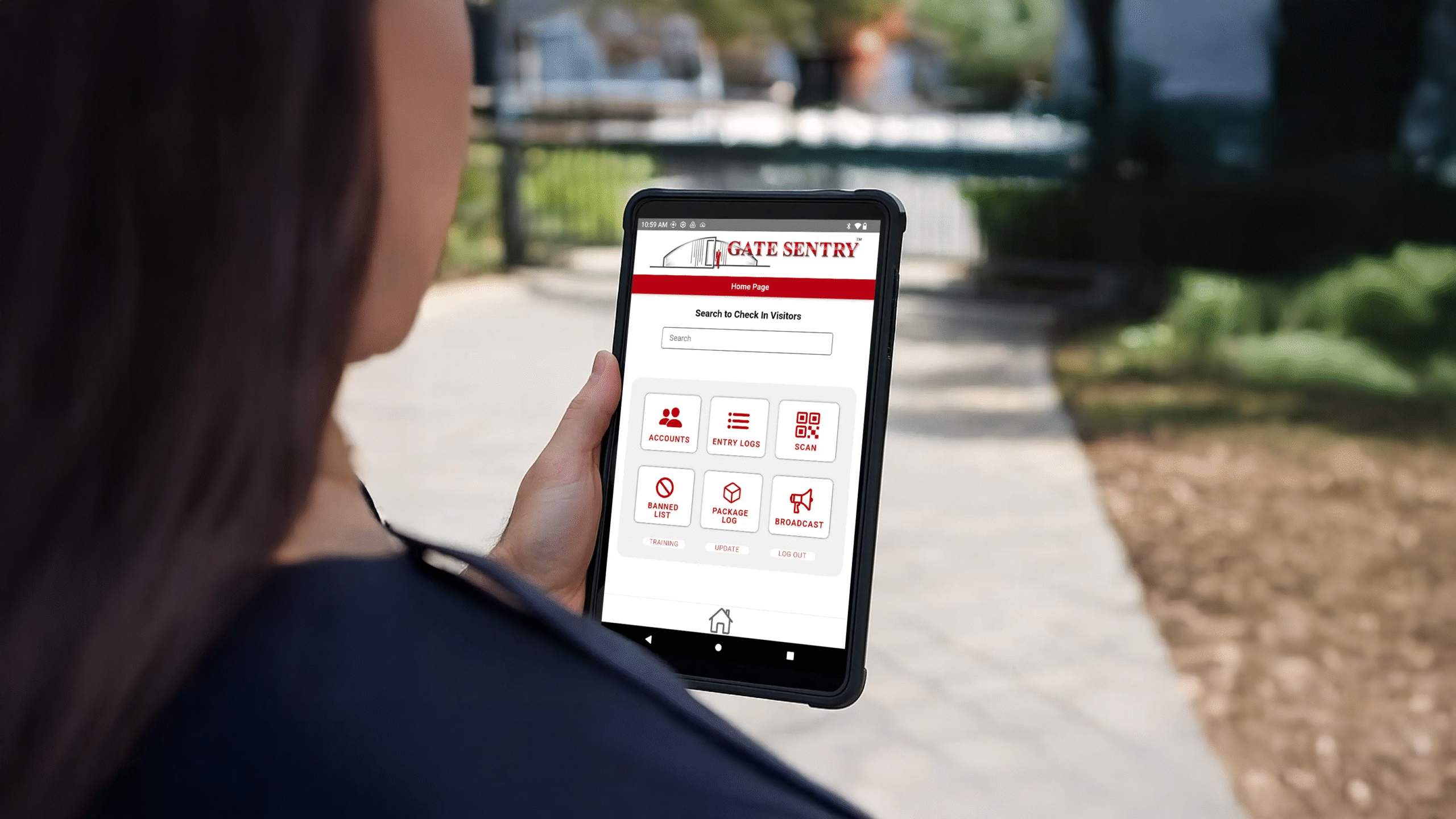
Visitor management software for security companies is a digital platform that replaces paper logs, desktop computers, and manual check-in processes at guard-staffed entrances. It gives security officers a tablet-based system for verifying visitors in seconds, provides supervisors with real-time visibility into guard activity across all posts, and generates the digital entry logs and reporting that property clients expect. For security companies managing guards at gated communities, apartment complexes, commercial buildings, and industrial sites, modern visitor management software is the difference between retaining clients and losing them to competitors with better technology.
The challenge for most security guard companies is that the visitor management tools available today were designed for corporate lobbies and office buildings — not for the high-volume, fast-paced reality of guard-staffed residential gates. This guide covers what security companies should look for in a visitor management system, why outdated tools are costing you contracts, and how the right platform gives your guards better tools and your clients better results.
Why Security Companies Need Visitor Management Software
Security guard companies face a unique problem: your clients — HOA boards, property managers, and community associations — are demanding better technology, but most visitor management tools weren't built for the way residential gates actually operate.
The Client Retention Problem
When an HOA board reviews their security contract, they look at three things: how fast visitors are processed, how accurate the entry records are, and how much real-time visibility they have into gate activity. If your guards are still using paper logs or slow desktop computers, the board sees an outdated operation — and starts looking for alternatives. Modern visitor management software gives your company the technology advantage that justifies your contract and makes switching to a competitor less attractive.
The Guard Efficiency Problem
Guards at residential gates aren't sitting behind a desk. They're walking out to vehicles, checking IDs, handling unexpected visitors, and managing constant traffic flow. Paper logs and desktop systems slow them down. A tablet-based visitor management system lets guards process check-ins from anywhere at the gate — scanning digital passes, searching visitor records, and contacting residents without ever going back inside the guardhouse.
The Supervisor Visibility Problem
Security supervisors managing multiple posts across multiple properties need real-time visibility into guard activity — who checked in which visitors, when shifts started, and whether procedures are being followed consistently. Paper logs provide zero real-time oversight. A cloud-based visitor management system gives supervisors a live dashboard showing guard activity across every property from one screen.
What Guard-Staffed Gates Need vs What Corporate VMS Tools Provide
Most visitor management systems on the market were designed for corporate offices: sign-in kiosks in lobbies, badge printing for meetings, and conference room scheduling. These tools don't work at a gate where a guard is processing a car every 30 seconds during peak traffic.
| Requirement | Corporate Office VMS | Guard-Staffed Residential VMS |
|---|---|---|
| Primary User | Receptionist at a desk | Security guard at a vehicle gate |
| Check-In Speed | 1-3 minutes (acceptable in lobby) | Under 10 seconds (cars are stacking up) |
| Device | Desktop kiosk or iPad on a stand | Portable tablet the guard carries to vehicles |
| Visitor Volume | Dozens per day | Hundreds per day at peak |
| Offline Capability | Rarely needed (stable office WiFi) | Critical (gate WiFi drops frequently) |
| Resident Integration | Not applicable | Essential — residents pre-authorize guests from their phone |
| Multi-Property Oversight | Single location | Multiple communities managed from one dashboard |
What to Look for in Visitor Management Software for Security Guards
A visitor management system built for security guard companies needs to solve problems that corporate tools ignore. Here are the features that matter most:
Tablet-Based Check-In
Guards need a portable device they carry to vehicles, not a desktop computer bolted inside the guardhouse. A tablet-based system lets the guard walk up to a car, scan the visitor's digital pass, verify their identity, and log the entry — all without going back inside. This is the single biggest speed improvement you can make at a busy gate.
Real-Time Guard Activity Visibility
Supervisors and property managers need to see what's happening at the gate in real time — not hours later when a paper log gets reviewed. Cloud-based visitor management software shows every check-in as it happens, across every property, from a single dashboard. This gives supervisors the tools for real-time visibility into guard activity that clients increasingly demand.
Dynamic Visitor Search
When an unexpected visitor arrives, the guard needs to find the right resident account in seconds — not minutes. A strong VMS lets guards search by visitor name, resident name, address, license plate, or vendor company, with results appearing as they type.
Resident Pre-Authorization
When residents pre-register their guests through a mobile app, the visitor arrives at the gate already approved. The guard confirms the name, scans the digital pass, and the car moves through in seconds. This eliminates the biggest bottleneck at busy gates: the guard calling residents to ask "are you expecting someone?"
Digital Guest Passes (SentryPass)
Residents send visitors a digital pass via text or email that saves to Apple Wallet or Google Wallet. When the visitor arrives, the guard scans it with the tablet — instant verification, no phone calls, no delays. This is what a modern security visitor management system looks like in practice.
Offline Capability
Gate WiFi drops. It happens. A visitor management system that stops working during an outage is useless. The system must continue operating offline — guards keep processing visitors, and all data syncs automatically when connectivity returns.
Guard Reporting and Entry Logs
Every check-in is recorded with the visitor's name, the resident they visited, the guard who processed them, and the exact timestamp. These digital logs are searchable, filterable, and exportable — replacing handwritten logs that are illegible, incomplete, and impossible to audit. This is the guard reporting platform with mobile data entry that supervisors need.
Multi-Property Dashboard
Security companies managing guards across multiple communities need a centralized view of all properties. A cloud-based dashboard shows guard activity, visitor volume, and entry logs for every location from a single login — giving supervisors and account managers real-time oversight without visiting each site.
How Paper Logs, Desktop Systems, and Gate Sentry Compare
| Feature | Paper Logs | Legacy Desktop VMS | Gate Sentry (Cloud) |
|---|---|---|---|
| Built for Residential Gates | No | Partially | Yes — purpose-built |
| Real-Time Guard Activity | No | Limited (local only) | Yes — live cloud dashboard |
| Resident Pre-Registration | No | No | Yes — mobile app and web portal |
| Digital Guest Passes | No | No | Yes — SentryPass via Apple/Google Wallet |
| Tablet-Based for Guards | No | No — desktop only | Yes — portable tablet at the gate |
| Offline Capability | N/A | No | Yes — works without internet |
| Guard Reporting | Manual, slow, error-prone | Basic exports | Instant digital reports with full audit trail |
| Multi-Property Oversight | No | No | Yes — all properties from one dashboard |
| Setup Cost | Low (but hidden costs in errors and liability) | High (hardware, software, IT support) | Low — hardware-free, tablet only |
How Visitor Management Software Helps Security Companies Retain Clients
Security contracts don't get cancelled because of one bad incident. They get cancelled because property managers feel like they have no visibility, no accountability, and no modern tools at the gate. Visitor management software changes that equation:
- HOA Board Presentations: Instead of handing over a stack of paper logs, you pull up a digital dashboard showing visitor volume, peak traffic times, guard response metrics, and a searchable entry history. This is the level of reporting boards expect in 2026.
- New Business Pitches: When competing for a new contract, showing a live demo of your tablet-based check-in system, real-time dashboards, and digital guest passes immediately differentiates you from competitors still using paper.
- Guard Training and Consistency: A standardized digital system means every guard follows the same process at every property. New guards learn the system in under an hour. Turnover becomes less disruptive because the system enforces consistency.
- Reduced Complaints: Faster check-ins mean shorter gate lines. Digital passes mean fewer "my guest got turned away" calls. Real-time logs mean property managers can answer resident questions instantly instead of waiting for a shift report.
Which Properties Use Guard-Staffed Visitor Management?
- Gated Communities: The primary market — high visitor volume, HOA oversight, and resident expectations that demand modern technology at the gate.
- Resorts and Country Clubs: Member and guest check-in with temporary access passes and event management.
- Commercial and Industrial Sites: Contractor, vendor, and delivery check-in with compliance-grade digital logs.
- Apartment Complexes: Staffed lobby or gate entry with real-time resident notifications and visitor tracking.
Real-World Scenario: Friday Night at the Gate
Picture a busy Friday evening at a 500-home gated community. Delivery vans, rideshares, and weekend guests are stacked at the gate. Here's the difference between outdated tools and modern visitor management:
Without Visitor Management Software
- The guard is flipping through paper logs and calling residents to verify each visitor.
- Cars are backing up. Residents behind visitors in line are honking.
- An unexpected vendor arrives with no record — the guard has to call the management office, which is closed.
- The supervisor has no idea what's happening because they're at another property.
With Gate Sentry
- Residents pre-registered their guests through the app. The guard confirms each visitor with a quick tablet scan.
- A returning delivery driver is found in the system instantly — their info is already stored from last week.
- The unexpected vendor is handled in seconds: the guard contacts the resident through the system, gets approval, and logs the entry.
- The supervisor sees every check-in happening in real time from their phone across all properties.
- WiFi drops mid-shift — the system keeps working offline and syncs when connectivity returns.
The line moves smoothly. The guard feels confident. The residents notice the difference. And when the HOA board reviews the security contract, they see a modern operation backed by data — not a stack of handwritten logs.
Getting Started
Gate Sentry is one of the only cloud-based visitor management systems designed specifically for security companies operating at guard-staffed residential gates. It replaces paper logs, desktop computers, and hardware-heavy systems with a single tablet that gives guards everything they need and supervisors everything they want to see.
Most security companies are fully operational within days, with dedicated training for guards, supervisors, and the property management clients they serve.
Give Your Guards Better Tools and Your Clients Better Results
See how security companies are using Gate Sentry to modernize guard operations, retain clients, and win new contracts. Schedule a personalized demo today.
Schedule a Demo