
License Plate Readers vs RFID vs Bluetooth: Gate Access Guide
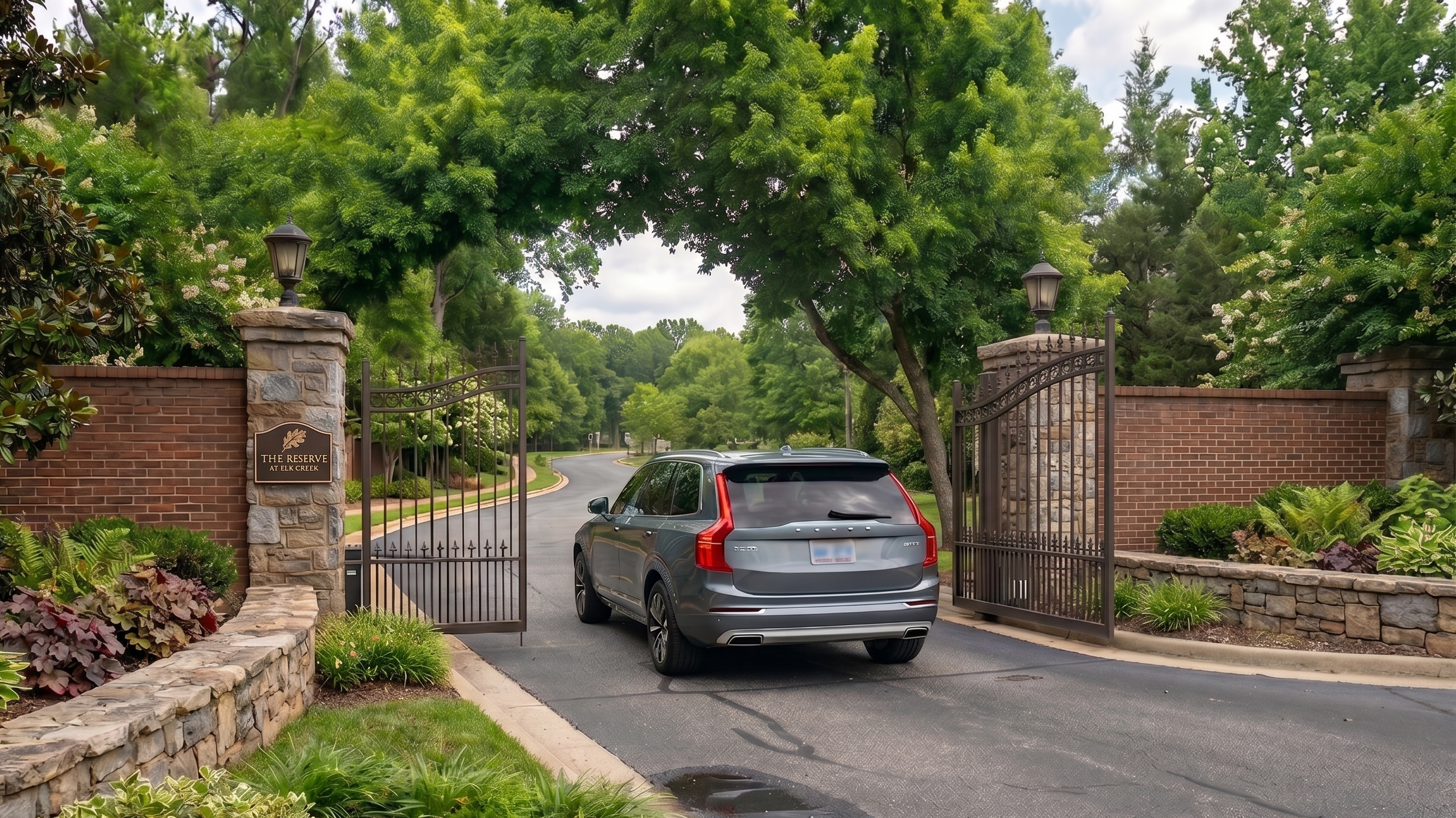
License plate readers, also called LPR systems or ALPR (automatic license plate recognition), have become one of the most talked-about technologies in modern gate access control. But they're only one option in a much larger category of vehicle access control systems — and they may not be the right one. This guide walks through every major gate access technology in use today, from the windshield RFID tag systems that have dominated for two decades, to barcode decals, to the LPR cameras everyone is currently debating, to the Bluetooth access control systems quietly replacing all of them.
If you're researching license plate recognition systems for a property, evaluating LPR technology against alternatives, or trying to understand how license plate readers actually work in practice, you're in the right place. By the end you'll know which gate access control approach makes sense for your use case and why the industry is rapidly shifting toward Bluetooth-based mobile credential access.
What Passive Gate Access Control Actually Means
Passive gate access is any vehicle access control system that authenticates an authorized driver or vehicle automatically as they approach, without requiring the driver to do anything beyond drive up. The opposite is active access, where the driver has to take an action — punch in a code, hand a guard their ID, scan a card, or push a button on a remote.
The promise of passive gate access systems has always been the same: faster entry, less frustration, lower staffing costs, no fumbling for credentials in the rain. The difference between technologies in this category is how they identify the authorized driver — and whether the technology actually delivers on the promise or creates new problems along the way.
There are four primary gate access control technologies in widespread use today. Three of them have been showing their age for years. The fourth is what's replacing them.
Barcode Gate Access: The Original Passive Technology, Now Showing Its Age
Barcode gate access systems were one of the first widely adopted passive access technologies. The concept is simple: each authorized vehicle gets a barcode decal applied to the windshield, and an optical scanner at the gate reads the barcode as the vehicle approaches.
The problem is that the technology was designed for a world that no longer exists.
- Decals deteriorate constantly. Sun, heat, and weather cause barcode decals to fade, crack, and become unreadable — often within just a few years in warmer climates. Properties in hot climate regions find themselves running rolling replacement programs with administrators spending hours every month re-issuing decals to users whose existing barcodes have stopped scanning reliably.
- Reader sensitivity creates daily frustrations. Optical barcode scanners require precise alignment between the decal and the reader. Vehicles with tinted windshields, dash-mounted cameras, GPS units, parking permits, or any other windshield clutter can interfere with reads. Drivers traveling slightly too fast, slightly off-center, or in heavy rain often get rejected and have to back up and try again.
- Every credential change is a manual process. When a user sells their car, the old decal is now floating around on a vehicle the property has no control over. When a user buys a new car, they have to come in and have a new decal applied. Property managers spend significant time managing this physical credential lifecycle.
- Visitors and contractors are unsupported. Barcode systems don't scale to visitors. Every guest, contractor, or delivery driver has to be handled through a separate process. The technology has no upgrade path; it doesn't integrate with mobile credentials, modern visitor management workflows, or contemporary cloud-based access control platforms.
RFID Gate Access: A Step Forward That's Now a Step Behind
RFID — radio frequency identification — replaced barcodes as the dominant credential-based gate access control technology in the 2000s and remains widely deployed in vehicle access control systems today. RFID transponders communicate with a reader at the gate using radio frequency signals, allowing drivers to pass through at normal speed without slowing down. The familiar windshield RFID tag became the standard credential across gated communities, parking access control deployments, and corporate campuses.
RFID gate access was a meaningful improvement over barcodes when it was introduced. Two decades later, it's accumulated its own catalog of problems.
- Transponders fall off, fail, and require constant replacement. The transponder is typically a small device adhered to the windshield. In hot climates, the adhesive fails and transponders fall onto the dashboard. Active RFID transponders contain batteries that eventually die, requiring property-wide RFID battery replacement cycles that can run into significant five-figure expenses for a typical deployment. Windshield replacements destroy transponders. Sun damage degrades the electronics over time.
- The credential is bound to the vehicle, not the user. This is the structural limitation of every RFID-based system. The transponder identifies the car, not the person driving the car. When users drive rental cars during travel, borrow a family member's vehicle, or pick up a new car from the dealership, they're locked out until the new vehicle is registered. Visiting drivers in their own car can't get through.
- Lost and stolen transponders create permanent security gaps. When a transponder is lost or stolen, the property has to deactivate it in the database, which requires the user to report it, which often happens days or weeks after the loss. During that gap, anyone who finds or steals the transponder can drive through the gate.
- Database management becomes a permanent operational burden. Every vehicle change, every new user, every move-out, every sold car, every new family vehicle requires a database update. Properties with significant turnover spend dozens of hours every month maintaining the RFID database.
- The replacement cycle is brutally expensive. Properties that adopted RFID in the 2000s and early 2010s are now hitting the end-of-life replacement window for their original systems. Re-issuing hundreds or thousands of transponders, plus replacing aging readers, plus migrating the database, plus the staff time, runs into substantial five-figure or low-six-figure expenses, and the result is a system that will be obsolete again in another decade.
License Plate Readers (LPR/ALPR): The Wrong Answer to the Right Question
License plate readers, also called LPR cameras, ALPR cameras, or automatic license plate recognition systems, take a fundamentally different approach to gate access control. Instead of identifying an authorized credential, LPR cameras photograph every vehicle that approaches the gate, use AI to read the license plate, and check the plate against a database of authorized vehicles.
How Do License Plate Readers Work?
A license plate reader system combines a high-resolution camera, infrared illumination for night reads, and AI-based optical character recognition software. As a vehicle approaches the gate, the LPR camera captures an image, the software extracts the plate number, and the system queries a cloud database to determine whether the plate is authorized. If matched, the gate opens. If not, the system can deny entry, alert a guard, or simply log the vehicle.
License plate recognition technology is now used in three main contexts: law enforcement, such as LPR police applications where ALPR cameras feed national hot-list databases; commercial security, including license plate surveillance camera deployments at retail centers and logistics yards; and gate access control, where the LPR system functions as the credentialing layer for a property.
LPR is sold as the modern, AI-powered upgrade to traditional gate access systems. In practice, it has serious problems that vendors don't disclose during the sales process and most properties only discover them after the LPR cameras are installed.
The Real Problems With LPR Systems
- Misread rates are far higher than vendors disclose. While vendor marketing typically claims accuracy in the high 90s, independent real-world testing has shown misread rates dramatically lower than what's advertised, with accuracy degrading further under poor lighting, weather, or non-standard plate conditions. Common failure modes include numbers and letters being confused for similar-looking characters. Each misread potentially locks a legitimate user out of their own property.
- Plate types defeat the system routinely. Paper temporary tags fail. Dirty plates fail. Bent plates fail. Snow-covered plates fail. Motorcycle plates with the same numbers as cars trigger false matches. Many states are one-plate states with no front plate, and modern vehicles often deliberately omit front-plate brackets, meaning the camera sees the front of an approaching car and reads nothing.
- The system identifies the vehicle, not the user. Same problem as RFID, made worse. When users drive rental cars, borrowed vehicles, or new purchases, they're locked out until the plate is added to the database. LPR database management requires the user to provide their plate number in advance for every vehicle they might possibly drive, including loaners, rentals, and family members' cars.
- Environmental conditions degrade accuracy constantly. Headlight glare washes out night reads. Sun angle and lens flare degrade dawn and dusk accuracy. Mud and snow render plates unreadable. Solar panels under tree canopy fail to charge cameras. Batteries degrade over time. Cellular coverage is unreliable in exactly the rural and hilly terrain where many access-controlled properties are located.
- Cloud dependency creates total system failures. LPR systems depend on cloud connectivity to match plates against the database in real time. When the internet goes down, the entire access system fails. Properties lose gate function precisely when they need it most.
- Database management is dramatically worse than RFID. Every vehicle change has to be re-registered. Every visitor has to have their plate added in advance. Every contractor and delivery driver creates a database entry. The hidden labor of maintaining a plate database that handles every possible vehicle a user might drive overwhelms administrators within months of installation.
- Privacy concerns and ALPR data sharing implications are significant and growing. License plate recognition systems photograph and store images of every vehicle that passes, including authorized users, visitors, and delivery drivers. Many LPR systems share data with law enforcement networks, including federal agencies. This has generated substantial controversy: a growing number of cities have canceled LPR contracts, multiple state legislatures have passed restrictive laws, and active class-action litigation is moving through state and federal courts.
- The lease model leaves properties with nothing. The most common LPR pricing model runs as a per-camera annual subscription on multi-year contracts, with the hardware leased rather than purchased. After a typical contract cycle, a property has paid significant cumulative fees and owns nothing.
- Tailgating is invisible to LPR. The camera reads the first car through the gate. The second car follows behind and is never authenticated. License plate recognition architecturally cannot prevent tailgating, which means the security promise is partially illusory.
- Liability sits with the customer. Most LPR vendor contracts include narrow liability caps tied to recent contract fees and disclaim consequential damages. When something goes wrong, such as a wrongful detention based on a misread plate, a data breach, or a privacy lawsuit, the customer is left holding the bag.
Bluetooth Access Control: How Gate Entry Should Actually Work
Bluetooth access control represents a generational shift in how gate access systems work. Instead of identifying a vehicle or a physical credential, Bluetooth access control, sometimes called BLE access control or mobile credential access, identifies the user through their smartphone using Bluetooth Low Energy beacon technology.
- The user experience is genuinely effortless. The user installs an access app on their phone. The app holds an encrypted credential unique to that user. As the user's vehicle approaches the gate, a Bluetooth Low Energy beacon at the gate communicates with the phone in the user's pocket or vehicle. The phone presents the encrypted credential. If authenticated, the gate opens. The user never has to take the phone out, open an app, slow down, or do anything beyond drive up at normal speed. This is keyless gate entry and smartphone gate access as they should have always worked.
- The credential travels with the user, not the vehicle. This is the structural advantage that solves what every previous gate access control system got wrong, including LPR. The user is recognized regardless of which car they're driving. Rental cars during travel work. Borrowed vehicles work. New purchases work the moment the user drives them off the lot. Visiting drivers in their own cars work. The property no longer has to maintain a database of every possible vehicle every user might drive.
- Credential management becomes effortless. When a user is offboarded, the administrator revokes their digital credential in the platform. Access ends instantly. No transponders to recover. No decals to scrape off windshields. New users are onboarded in seconds by sending them a credential through the app.
- Authentication happens locally during outages. Bluetooth beacon authentication occurs directly between the phone and the gate hardware. The system continues to function during internet outages, cellular network issues, and storm-related infrastructure problems, the exact conditions that take down LPR systems.
- One credential covers every access point on the property. The same digital credential that opens the gate can authorize the user at parking access control points, building entrances, amenity areas, and any other access-controlled location. The patchwork of separate fobs, decals, codes, and keys consolidates into a single credential the user already carries everywhere.
- Visitor management is built into the same architecture. Authorized users can pre-authorize guests directly through the same app. Guests receive a temporary mobile pass on their phone that works at the gate without anyone stopping or calling. Contractors and delivery drivers can be authorized for specific time windows.
- The privacy profile is excellent. Bluetooth access control authenticates a digital credential held on the user's phone. There is no photograph of the vehicle, no plate database, no national surveillance network, and no data sharing with third parties.
- The cost structure favors the customer over the long term. No physical credentials to manufacture and distribute. No batteries to replace. No decals to re-issue. No subscription escalation tied to per-camera pricing. The property owns the gate hardware rather than leasing it.
- The technology continues to improve through software. Unlike barcodes, RFID, or LPR, which are fundamentally limited by hardware and AI accuracy, Bluetooth access control improves through software updates that reach users automatically without hardware changes.
How to Choose: Comparing License Plate Readers, RFID, Barcodes, and Bluetooth
The honest answer is that decision-makers aren't really choosing between four equally viable gate access control technologies. They're choosing between three legacy approaches with known limitations and one modern approach that solves the problems the legacy approaches couldn't. The table below summarizes how the four technologies compare across the dimensions that matter most.
| Capability | Barcode | RFID | LPR / ALPR | Bluetooth (BLE) |
|---|---|---|---|---|
| Identifies | Vehicle decal | Vehicle transponder | License plate | User (smartphone) |
| Real-world accuracy | Low — degrades with weather and decal age | High in ideal conditions | Variable — drops in poor light, weather, non-standard plates | High and consistent |
| Works in rental / borrowed cars | No | No | No (plate must be pre-registered) | Yes |
| Works during internet outage | Yes | Yes | No — cloud dependent | Yes — local authentication |
| Privacy profile | Neutral | Neutral | Concerning — image storage, data sharing | Strong — encrypted credential, no surveillance |
| Ongoing costs | Decal reprints, labor | Battery cycles, transponder replacement | Per-camera subscription, lease fees | Software-only updates |
| Hardware ownership | Owned | Owned | Typically leased | Owned |
| Best fit today | Legacy systems only | Existing deployments nearing replacement | Niche enforcement / surveillance use | New installs and modern upgrades |
- Barcode gate access is reliable but shows its age, being labor-intensive, weather-degraded, and architecturally frozen in the 1990s. Most properties still running barcode systems are running them because they haven't done a full access control review in many years.
- RFID gate access was the right answer for its era but has accumulated structural problems, including credential lifecycle management, vehicle-binding limitations, and expensive replacement cycles. Properties hitting the end-of-life RFID replacement decision are increasingly skipping the like-for-like upgrade.
- License plate readers are the loudest pitch in the market right now, but LPR systems have the most serious downsides: high error rates that lock out users, vehicle-binding issues, heavy database management, cloud dependency, and significant privacy concerns.
- Bluetooth access control delivers what gate access systems were always supposed to deliver: drive up, gate opens, no stopping, no fumbling, and no surveillance burden. It identifies the user rather than the vehicle, works locally during outages, supports visitors natively, and respects user privacy.
For organizations planning their next gate access control investment, whether that's a fresh installation, a transponder replacement cycle, or a reassessment of an existing license plate recognition deployment, Bluetooth access control is increasingly the obvious choice. The technology is mature. The deployment model is straightforward. The user experience finally lives up to the promise that gate access systems have been making for decades.
Whether you're managing parking access control at a corporate campus, multi-family access control at an apartment community, gated community access control at an HOA, or commercial property access control at a logistics facility, the calculation is the same. The right question was never how to identify every vehicle that approaches the gate. The right question was always how to make it effortless for authorized drivers to come and go. Bluetooth access control answers the right question.
Frequently Asked Questions About Gate Access Control Systems
How do license plate readers work for gate access?
An LPR system uses a camera with infrared illumination and AI-based optical character recognition software to capture and read the license plate of each approaching vehicle. The system queries a cloud database to determine whether the plate is on the authorized list, then triggers the gate to open or stay closed.
What's the difference between LPR and ALPR?
They refer to the same technology. LPR (license plate recognition) and ALPR (automatic license plate recognition) are used interchangeably across the industry. Some vendors prefer ALPR to emphasize the automation, while others use LPR for brevity.
How accurate are license plate readers?
Vendor marketing typically claims accuracy in the high 90s. Independent real-world testing has consistently shown misread rates well below what's advertised, with accuracy dropping significantly further in poor weather, low light, and with non-standard plate types like paper temporary tags.
Is RFID gate access better than license plate recognition?
For pure access control, yes. RFID has lower error rates, doesn't depend on cloud connectivity, and doesn't generate the privacy and legal exposure that LPR creates. However, both RFID and LPR are vehicle-bound credentials, meaning they fail when residents drive rental cars or borrowed vehicles.
What's the most modern gate access control technology?
Bluetooth access control, sometimes called BLE access control or mobile credential access, is the current state of the art. It identifies the user through their smartphone rather than the vehicle, works locally during outages, supports visitor management natively, and avoids the privacy issues that LPR systems create.
Can Bluetooth gate openers replace existing RFID systems?
Yes. Most modern Bluetooth access control platforms are designed to coexist with or fully replace RFID, barcode, and LPR systems. Many properties run a hybrid for the transition period, keeping RFID active for residents who don't carry smartphones, then phase out the legacy system over a year or so.
Ready to modernize your gate access?
Discover why Gate Sentry is the leader in mobile-first access control for gated communities and commercial sites.
Schedule a Professional Demo