
Visitor Management: Gate Sentry vs Competitors
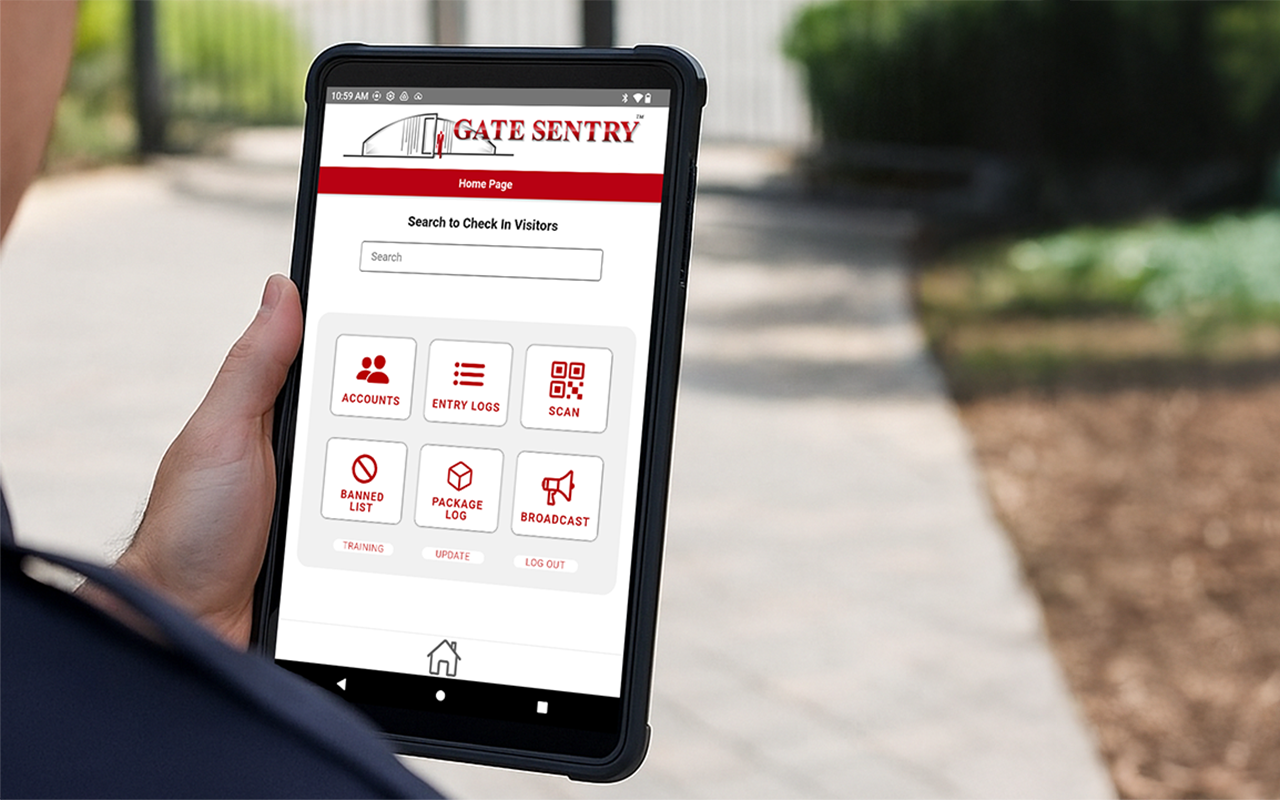
A plain-English look at what real online reviews say about visitor-management software, and how we stack up against the other options on the market.
If you're on an HOA board, manage a property, or just live in a gated community, you've probably realized that picking visitor-management software is harder than it should be. Every vendor's website says the same things. So instead of trusting the sales pitch, we did something simpler: we read the reviews. Lots of them. App Store and Google Play ratings, Capterra, the Better Business Bureau, and community forums, the places where actual residents, property managers, and security guards say what the software is really like to use.
Here's what we found, laid out as a straight comparison.
What This Guide Covers
The Big Picture, in One Sentence
Most of the products in this space fall into two camps, and the camp a product belongs to predicts what its reviews look like.
| Many competitors in the space | Us (Gate Sentry) | |
|---|---|---|
| How it works | Rely on physical hardware (computers, scanners, gate kiosks) or remote human guards | 100% app-based and cloud-based, no special hardware |
| Typical review complaints | App crashes and freezes, guest lists that won't load, unreliable alerts, login failures, weak support, plus equipment breakdowns and cost on hardware systems | Cosmetic only, and the few minor issues in older reviews have since been fixed |
| What breaks | Physical equipment in the field, plus the software on top of it | If something's off, it's a software tweak; there's no hardware to fail |
| Resident app ratings | Frequently low, several sit near 1.5 stars | ~4.8 stars on Apple, across 9,400+ ratings |
The rest of this article just unpacks that table.
Why Real Reviews Are the Best Way to Choose
Every visitor-management company can describe itself well. Secure. Easy. Reliable. Those words show up on every website in the category, ours included, and they're a fine starting point. But the most useful information when you're choosing a system doesn't come from any company's marketing. It comes from the people who use the product every single day.
That's because day-to-day reality is where the real story lives. A feature listed on a website is a promise; a feature praised in hundreds of reviews is a proven fact. A demo shows you a product on its best day, run by an expert. Reviews show you how it holds up on an ordinary Tuesday, run by your residents at the gate at 9 p.m. Both are worth looking at, but the second one is the one that tells you what you'll actually live with.
So here's the simple, confident rule this whole article is built on: let the people using each product do the talking. The folks leaving reviews don't work in sales. They're residents getting guests in, guards verifying visitors, managers running daily operations, and they have no reason to spin anything. When thousands of them consistently rate a product highly over years, that's the strongest endorsement there is, because it's the one kind of evidence a marketing team can't write.
We say that with full confidence, because it's a test we welcome on ourselves. We could tell you we listen to feedback and ship updates every month, and we do, but you don't have to take our word for it. Go read our reviews, and read everyone else's the same way. We're happy to be measured by what our users say, and we think that's exactly how you should measure any vendor you're considering.
What People Complain About Across the Rest of the Market
When you read through the reviews of other systems in this category, the complaints tend to fall into three buckets. These aren't one company's problems; they're patterns that show up across many vendors:
1. The app and software itself is unreliable
This is the most common, and most damaging, group of complaints. Reviewers describe security hardware or software that crashes or freezes mid-task, often right when adding or editing a guest, guest lists that fail to load when you need them, and notifications that don't come through reliably. Think about what that means in practice: a guest is waiting at the gate, and the security software either locks up, won't show the visitor list, or never alerts the resident at all. When the core job of the product fails at the moment you actually need it, nothing else about the system matters.
2. Clumsy, confusing navigation
Even when an app doesn't crash, reviewers complain it's a chore to get through. Menus are hard to find, screens dead-end, and simple actions take more taps than they should. The visitor list is sometimes organized in a way that makes quick edits awkward, and basic tasks feel slower than they need to be. None of this breaks the app outright, but it adds friction to something residents do constantly, and friction is what makes people give up on the app and just call the gate instead, defeating the whole purpose of the software.
3. Hardware fails, and it costs you
For the systems that lean on physical equipment, reviews describe gear that breaks down, slow repairs, and long lines at the gate while things are down. In the worst cases, reviewers describe multi-week outages where the whole system goes down and every gate in the community is forced to stay wide open, leaving the neighborhood completely unsecured for weeks at a time. Residents also question whether the high cost is worth it, and, most tellingly, some say they end up feeling less safe than before. That's the worst possible outcome for a security product: residents paying more and trusting it less.
The common thread: the most serious complaints in this category are about the product failing at its actual job, getting guests in smoothly and keeping the community secure, not about minor cosmetic gripes.
How to Tell a Good System From a Bad One (a Simple Rule)
Here's the single most useful thing we learned from reading thousands of reviews:
If the complaints are about small stuff, a button in an awkward spot, a clunky menu, that's actually a good sign. It usually means the important things work, and people only have energy left to nitpick the details. If the complaints are about big stuff, "I couldn't get in," "the gate was open for days," "no one answered support," that's a warning. Those are the problems you'll be stuck living with.
The first kind is about polish. The second kind is about trust. You can put up with a little missing polish. You cannot put up with a gate that won't open, or won't close. By that test, the hardware-heavy competitors tend to have trust problems. We tend to have polish problems. That's the core of the difference.
Where We Land
Here's our side, with real numbers you can go check yourself rather than adjectives we made up. Gate Sentry is app-based and runs in the cloud, on a phone or tablet, no callboxes, no computers, no special equipment that can break. Since the first Texas installation in 2015, it's grown to serve hundreds of communities and commercial properties across the U.S., gated communities, apartments, hospitality, and commercial sites, with options like VirtualKey for smartphone entry, SentrySign for QR-code visitor access, and VirtualKeypad for app-free gate entry. All hardware-free, all cloud-based. As of this writing, the ratings are roughly:
- ~4.8 stars on the Apple App Store, across more than 9,400 ratings
- ~4.7 stars on Google Play, across about 938 ratings
- ~4.4 on Capterra (the main software-review site for businesses)
Why the 9,400 number matters more than the 4.8. Anyone can score 5 stars from a dozen reviews, that's just friends and a few lucky days. Holding nearly 4.8 stars across more than nine thousand reviews is completely different. That rating has survived years of grumpy users, app updates, and every kind of edge case, and it's still near the top. A score that high, from a sample that large, is hard to fake and hard to fluke. It means the basics work, over and over, for thousands of different people.
What reviewers actually like: guests get in without a hassle, gate alerts arrive fast, and guards can confirm a scheduled visitor quickly. Notice those are all the big, trust-level things going right.
What they complain about: honestly, minor stuff, and here's the part worth underlining: the few small issues that show up in older reviews have since been fixed. Earlier reviewers mentioned a text field that rejected symbols and a date-selector wheel that felt fiddly. Those have been addressed in updates. The reason they still appear in the review history is simply that reviews don't disappear when a problem gets solved, they stay posted with their original date. So if you're checking us out, look at the most recent reviews specifically, that's the honest test of where a product is today.
But the fact that those issues got fixed isn't really the point. How they got fixed is.
Built by People Who Actually Use It, and Improved by the People Who Do
Here's what makes the difference, and it's the thing a feature list on a website can never show you: this product is shaped by feedback, on purpose, constantly.
Those older complaints didn't get fixed by accident. They got fixed because we were watching the reviews, listening to residents and guards, and treating each gripe as a to-do item rather than a one-star to ignore. That symbol-rejecting text field, the clunky date wheel, those are exactly the kinds of small, real-world annoyances that only surface when actual people use a product at an actual gate. We heard them, and we shipped fixes. That's not a one-time thing. It's how the product has always been built:
- Made by someone who lived the problem. Gate Sentry started in 2012 with Michael Rendon, a former HOA president who was fed up with visitor management in his own gated community: expensive, hardware-heavy systems that meant long lines at the gate, frustrated residents, and piles of paper logs. He didn't set out to start a company; he just wanted a system that actually worked. He spent months working alongside security staff and property managers documenting what was really needed, and a small engineering team spent over a year building the platform from the ground up. The first installation went live in a Texas community in 2015. Because it was built by people who understood gate access from the inside, it solves the problems that actually come up, not the ones that look good in a demo.
- Updated every month, not every few years. New features and refinements ship on a monthly basis, the opposite of the "big redesign every few years that makes everything worse" pattern you see elsewhere in the category. Steady, incremental improvement means problems get fixed while they're still small.
- Feedback is something we go looking for. We gather it through direct outreach and our support team, so issues surface in conversation rather than in a one-star review. We don't wait for someone to get frustrated enough to complain publicly, we ask first.
- Real requests become real features. When users ask, we build. Our Access Scheduler and account-level restrictions both came directly from things customers told us they needed. That's the clearest proof of the loop working: a resident or manager raises a need, and it turns into something everyone gets to use.
This is why the review pattern looks the way it does. When a product is genuinely built around its users and improved continuously, the serious complaints get caught and fixed early, and what's left is small polish, the good kind of problem. The minor issues in our older reviews aren't a weakness in the story. They're proof of the process: feedback came in, and the product got better.
And note what kind of complaints these ever were: every one was a polish issue, not a trust issue. Nobody was locked out, no gate was stuck open, no community went unsecured. Minor friction, heard and resolved, a very different situation from the reliability problems that follow the hardware-heavy systems around.
A Quick Checklist Before You Sign With Anyone
Use this on us, too, we mean that.
- Count the reviews, not just the stars. A 5.0 from 12 people is noise. A 4.8 from thousands is a real track record. Trust the bigger number.
- Read the 1-star reviews specifically. Are people mad about looks, or about getting locked out? That tells you which camp the product is in.
- Check the resident app's rating, not just the company's sales page. Your homeowners live in that app. If it's rated 1.5 stars, that's your future headache.
- Ignore reviews the company wrote about itself. Some vendors publish their own "comparisons," sometimes even blog posts attacking rivals. Stick to neutral sites with lots of reviews.
- Search the reviews for the words that matter. Look for "crash," "freeze," "couldn't log in," "no support," and for hardware systems, "broke" or "repair." That's where the serious, recurring problems surface, not on the sales page.
The Bottom Line
We're not going to claim we're the only good choice, or pretend the reviews say something they don't. Here's the honest summary: across the market, the serious complaints cluster around the same things, apps that crash or freeze, guest lists that won't load, unreliable alerts, login and setup headaches, weak support, and on hardware-based systems, equipment that breaks down and costs more than it's worth. The newer, app-based tools tend to earn steady, high-volume trust. We're firmly in the second group, and our review numbers back it up.
But the real reason we're confident isn't the star rating, it's how we got it. This product is built by people who understand gate access from the inside, improved continuously, and shaped by the feedback we actively go out and ask for. That's why the serious problems get caught early and the small ones get fixed fast. A high rating from thousands of users isn't luck. It's what happens when you actually listen, and keep listening.
Don't take our word for it. That's the whole point of this article. Go read the reviews, ours and everyone else's, and the recent ones especially, and decide for yourself. We're happy to be judged on ours.
See how Gate Sentry holds up, then go check the reviews.
Take a look at what app-based, hardware-free visitor management actually looks like at the gate, then measure us against anyone else by what their users say.
Request a DemoAbout Gate Sentry
Gate Sentry is an app-based, hardware-free visitor management platform for gated communities, apartments, hospitality, and commercial properties. It runs in the cloud on phones and tablets, with no callboxes, computers, or special equipment to install or maintain. Learn more at gatesentry.com.