
Warehouse Visitor Management: How to Track Vendors, Drivers, and Deliveries
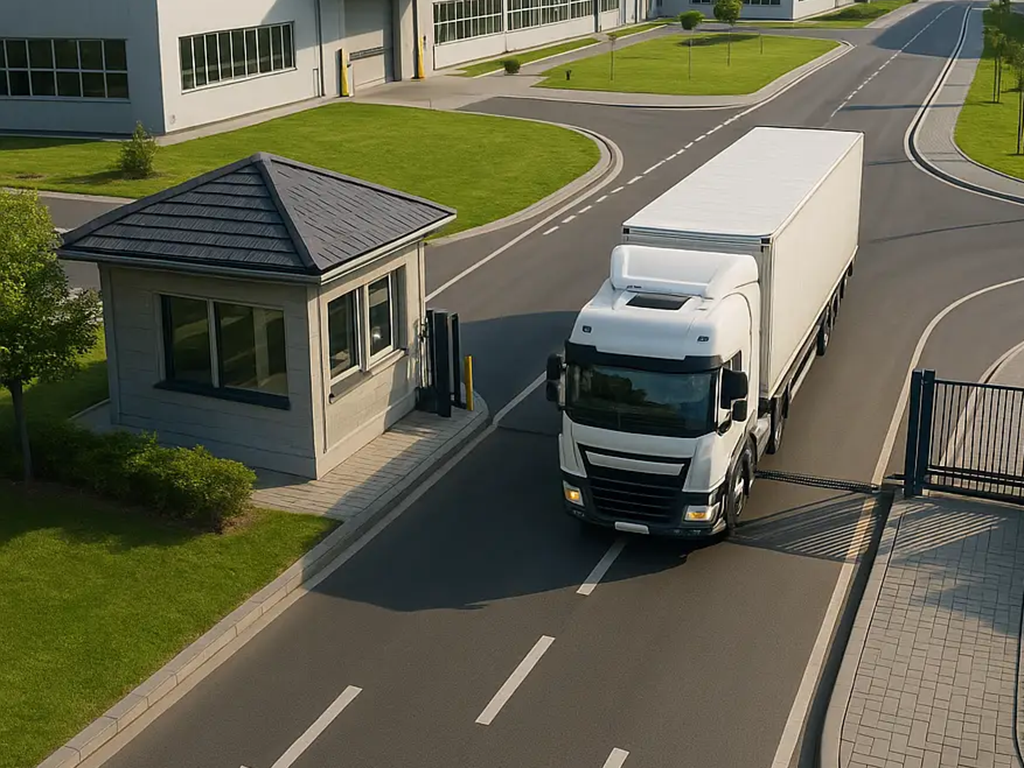
A warehouse visitor management system is software that tracks every person who enters and exits a warehouse, distribution center, or logistics facility. That includes delivery drivers, vendors, contractors, maintenance crews, and anyone else who isn't a full-time employee. It replaces the clipboard at the gate, the paper sign-in sheet on the dock, and the "just wave them through" approach that most warehouses still rely on.
If you manage a warehouse, you already know the problem. Dozens of trucks pull up to the dock every day. Contractors show up for maintenance. Vendors arrive unannounced. And at most facilities, the system for tracking all of this is a paper log that nobody reads, a guard who writes down names when they remember to, or nothing at all. Meanwhile, if inventory goes missing or someone gets hurt, you have no reliable record of who was in the building or when they were there.
The Real Cost of Not Tracking Warehouse Visitors
Most warehouse operators know their sign-in process is broken. They just haven't seen the numbers that show how much it's actually costing them.
$15 Billion in Annual Warehouse Theft
According to a Cisco-Eagle industrial security analysis, warehouses, manufacturing plants, and shipping docks account for an estimated $15 billion in theft losses every year in the United States, with 87% of those losses occurring at the facility level. When you can't verify who was in the building during a specific time window, investigating losses becomes nearly impossible. A visitor management system creates a timestamped, ID-verified record for every person who enters, giving you a clear trail when something goes wrong.
Cargo Theft Hit Record Levels in 2024
CargoNet recorded 3,625 cargo theft incidents in the U.S. and Canada in 2024, a 27% increase from 2023. The average stolen shipment was worth $202,364. What's changed is how thieves operate. Strategic theft, where criminals use fake identities, fictitious pickup orders, and social engineering to walk right through the front gate, grew from 8% of cargo theft in 2020 to roughly one-third of all incidents by the end of 2024. They're not breaking in. They're checking in. And if your gate runs on a paper log with no ID verification, there's nothing stopping them.
Warehouse Injuries Run Double the National Average
The Bureau of Labor Statistics reported that transportation and warehousing had a total recordable injury rate of 4.5 per 100 workers in 2023, nearly double the 2.4 rate for all private industry. Visitors who are unfamiliar with forklift traffic patterns, loading dock operations, and restricted zones face heightened risk. Having a verified record of every visitor who entered and when they arrived matters when an incident needs to be investigated.
39% of Facilities Still Use Manual Systems
An ASIS International survey of over 1,000 security professionals found that 39% of respondents still rely on manual systems for tracking temporary access credentials. Only 41% had integrated a visitor management solution with their access control. Among those who had, 70% rated their access control as highly effective, compared to just 54% without it.
How Tablet-Based Warehouse Visitor Management Works
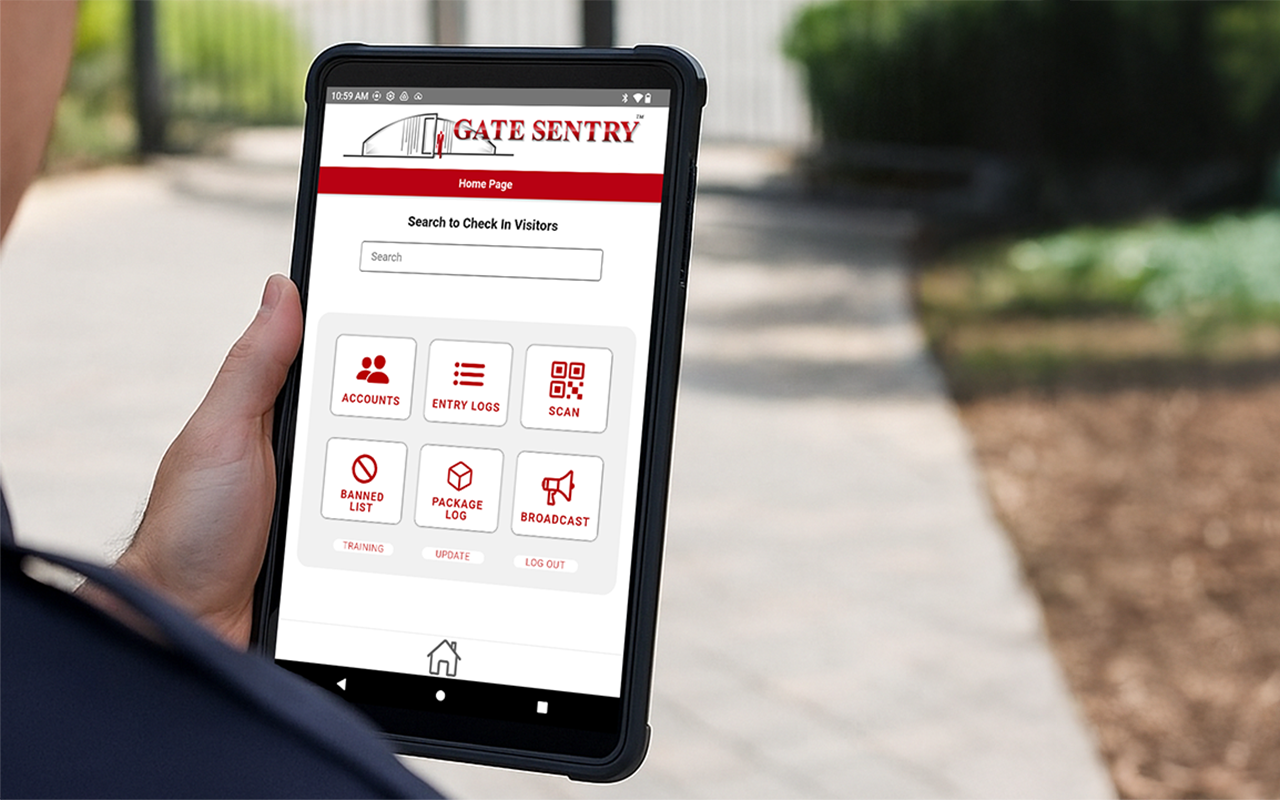
Warehouse visitor management isn't a lobby kiosk or a reception desk sign-in. In a warehouse, check-ins happen at the gate, the loading dock, the employee entrance, and the parking lot. The system needs to go where the traffic is. A tablet-based system puts everything a guard or dock supervisor needs into one portable device.
Gate Check-In for Drivers and Vendors
When a delivery truck, vendor, or contractor arrives at the gate, the guard creates an entry on the tablet in seconds. The system captures the driver's name, company, purpose of visit, truck number, and license plate, all with a timestamp. If the visitor has been here before, their profile is already stored, so check-in takes even less time. For pre-scheduled deliveries, the driver arrives with a digital pass on their phone that the guard scans on the tablet. Verified and logged in seconds.
Loading Dock Access Tracking
Loading docks are the highest-traffic entry point at most warehouses, but they're also the least likely to have any access tracking. Drivers back up, drop off or pick up, and leave. With a tablet-based system, dock supervisors log each dock interaction, tying the driver, carrier, and load to a specific time and dock door. That record becomes critical when a shipment dispute or damage claim comes in weeks later.
Contractor and Maintenance Visits
HVAC technicians, electricians, pest control, equipment repair crews. Warehouses have a steady flow of service contractors who need access to specific areas. A visitor management system logs when they arrive, verifies their ID, records which company sent them, and timestamps when they leave. If they're a recurring contractor, their profile is stored so future visits are faster.
After-Hours and Unmanned Access
Many warehouses operate around the clock, but they don't always have a guard at every entrance on every shift. For unmanned gates and secondary entrances, a QR code-based system lets authorized visitors scan a posted sign with their phone and enter a temporary access code. No guard needed. No callbox. No app download. Every entry is still logged and timestamped.
Warehouse Visitor Tracking: Paper vs Digital
| Function | Paper / Clipboard | Digital Tablet System |
|---|---|---|
| Driver Check-In Speed | 3-5 minutes, handwritten | Seconds with digital pass or tablet entry |
| ID Verification | Guard glances at ID, writes name | Photo of ID captured on tablet |
| License Plate / Truck Number | Rarely recorded | Logged at entry, tied to visitor profile |
| Returning Visitors | Processed as new every time | Stored profile, verified in seconds |
| Dock Activity Records | No record or separate paper log | Timestamped entries tied to dock doors |
| Loss Investigation | Flip through binders, hope for legible names | Search by name, date, company, or plate in seconds |
| After-Hours Access | Untracked or no access at all | QR code entry with logged timestamps |
| Multi-Location Visibility | Separate logs at each facility | One dashboard across all locations |
Why Warehouses Are a Bigger Target Than Most People Think
Warehouses aren't retail stores. They don't have customers walking in and out. But they do have something retail stores don't: high-value inventory concentrated in one building with dozens of people cycling through the door every day who aren't employees.
Think about who enters a typical warehouse in a single week: delivery drivers from multiple carriers, LTL and FTL pickup drivers, vendor reps, equipment service contractors, pest control, janitorial crews, IT maintenance, utility workers, building inspectors, and client auditors. At a busy distribution center, that's 50 to 100+ non-employees per week. On a paper log, they're a stack of scribbled names. With a digital system, every one of them has a verified identity, a timestamp, and a searchable record.
The National Insurance Crime Bureau estimates that true annual cargo theft losses in the U.S. exceed $1 billion, since many incidents go unreported. And it's not just external theft. The Association of Certified Fraud Examiners reports that internal theft costs U.S. businesses $50 billion per year across all industries. Warehouses, where employees and contractors handle high-value goods daily, are a prime environment for both.
What to Look for in Warehouse Visitor Management Software
Most visitor management software was built for corporate offices, not warehouses. Lobby kiosks and badge printers don't work at a loading dock. Here's what actually matters for warehouses and distribution centers:
- Portable Tablet Check-In: Guards and dock supervisors need a device they carry to the gate, dock, or entrance. Not a kiosk bolted to a wall.
- License Plate and Truck Logging: Vehicle traffic is a huge part of warehouse operations. Plates, truck numbers, and carrier names should be captured at entry and tied to visitor records.
- Digital Passes for Scheduled Deliveries: Regular drivers and vendors should receive a digital pass before arrival so check-in takes seconds instead of minutes.
- Photo ID Capture: A photo of the visitor's ID on file creates a verified record for every entry that a handwritten name never can.
- Cloud-Based Entry Logs: Records stored in the cloud and searchable by name, date, company, carrier, or plate. Accessible from any device, not trapped on one computer at the guard station.
- Offline Capability: Warehouse gates and docks don't always have reliable WiFi. The system must work when connectivity drops and sync automatically when it returns.
- QR Code Access for Unmanned Entrances: Secondary gates, after-hours entrances, and employee parking lots need self-service access that's still tracked and logged.
- Multi-Location Dashboard: If you operate multiple warehouses, you need one dashboard that shows gate activity across all locations.
- Returning Visitor Profiles: Drivers and vendors who visit weekly shouldn't go through a full check-in every time. Stored profiles make repeat visits fast.
- Exportable Reports: When management, clients, or insurers ask for entry records, you need to pull them in seconds.

How Gate Sentry Works for Warehouses
Gate Sentry is a tablet-based visitor management platform that replaces paper logs, clipboards, and desktop systems at staffed warehouse entrances. For warehouses and distribution centers, it provides:
- Tablet Check-In at Every Entry Point: Guards and dock supervisors manage all visitor, driver, vendor, and contractor check-ins from a portable tablet. Works at the main gate, loading docks, employee entrances, or anywhere on the facility.
- SentryPass Digital Passes: Scheduled drivers and vendors receive a digital pass via text and email before they arrive. Guard scans it on the tablet. Check-in in seconds.
- Photo ID and Plate Capture: Guards photograph visitor IDs and log license plates and truck numbers directly from the tablet. Every entry has a verified identity record.
- Dynamic Search: Find any driver, vendor, contractor, or vehicle instantly by searching name, company, carrier, plate, or date.
- Admin Dashboard: Warehouse managers and security supervisors view entry logs, visitor volume, and gate activity from any device.
- Exportable Reports: Generate entry reports for internal reviews, client audits, insurance inquiries, or loss investigations. Filterable by date range, visitor type, or entry point.
- Offline Mode: Guards keep processing visitors during internet outages. All data syncs automatically when connectivity returns.
- Multi-Location Support: Manage visitor tracking across multiple warehouses from one login and one dashboard.
For Unmanned Gates, Employee Entrances, and After-Hours Access
Most warehouses have a staffed main gate plus several unmanned access points: employee parking lots, contractor entrances, secondary dock gates, and after-hours entrances. For those, Sentry Solo provides hardware-free access control. Employees use VirtualKey on their phone to enter. Visitors scan a QR code posted at the entrance and enter a temporary code via VirtualKeypad. No callbox, no guard, no app download required.
Both Gate Sentry and Sentry Solo feed into one admin dashboard. Warehouse managers see every entry across every access point, staffed and unmanned, from one login.
Which Warehouses Need Visitor Management?
- Third-Party Logistics (3PL) Warehouses: Client contracts often require documented access records. Digital entry logs with verified IDs provide the accountability that paper cannot.
- Distribution Centers: High volumes of truck traffic need fast driver check-in, plate logging, and timestamped dock records for shipment accountability.
- Cold Storage and Refrigerated Warehouses: Restricted access zones and temperature-controlled areas require tracked entry to protect product integrity.
- E-Commerce Fulfillment Centers: Constant delivery and pickup traffic across multiple dock doors requires fast check-in, plate logging, and searchable entry records.
- Industrial Warehouses: Heavy equipment, high-value inventory, and constant contractor traffic require strict access tracking.
- Multi-Tenant Warehouse Complexes: Shared facilities with multiple operators need clear records of which visitors belong to which tenant, especially during disputes or incidents.
Ready to Track Every Visitor at Your Warehouse?
See how Gate Sentry's tablet-based visitor management system gives your warehouse verified ID capture, searchable entry logs, and exportable reports for every gate, dock, and entrance.
Request a Free Demo