
Gated Community Security Systems: 46% of Gate Traffic Is Vendors
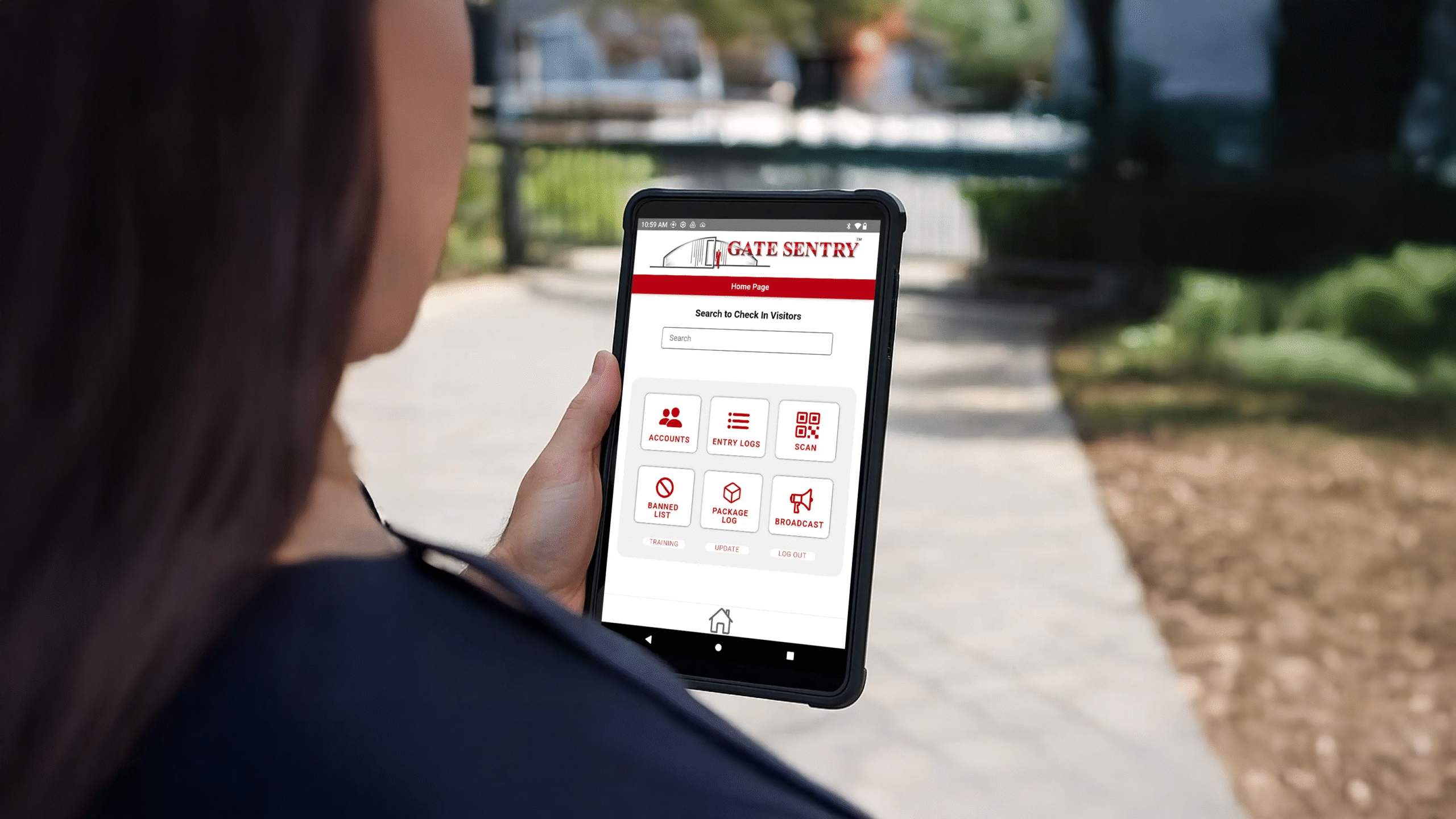
After analyzing millions of visitor entries across more than 100 gated communities with on-site security teams, Gate Sentry found that 46% of all non-resident gate traffic comes from vendors, delivery drivers, and contractors — not social guests. From Amazon Flex and UberEats to landscapers, pest control, HVAC technicians, and pool maintenance crews, vendor traffic has become the dominant volume at most gated entrances. Most gated community security systems weren't designed for this volume, and the tools guards use to manage it — paper logs, desktop computers, and manual call-ahead lists — create security gaps that grow wider every day.
This data changes how HOA boards, property managers, and security companies should think about gated community security. The real threat isn't the occasional unauthorized visitor — it's the hundreds of unverified vendor entries happening every week with no digital record, no ID verification, and no way to audit who actually entered the property.
The Data: What Gate Traffic Actually Looks Like
Most HOA boards assume their gate traffic is primarily social — friends visiting residents, family members coming for dinner, the occasional package delivery. The data tells a different story.
Across the 100+ gated communities analyzed, the non-resident traffic breakdown was:
- 46% Vendors, Contractors, and Gig Drivers: Amazon Flex, UberEats, DoorDash, landscaping crews, pool service, pest control, HVAC, plumbing, electrical, cleaning services, and construction contractors.
- 54% Social Guests and Personal Visitors: Friends, family, realtors, and other non-commercial visitors.
In many communities, vendor entries exceeded social guest entries on weekdays. Some properties logged more than 100 vendor entries per day. This isn't occasional traffic — it's the dominant pattern, and it requires a gated community security system built to handle it.
Why Legacy Security Systems Can't Handle Vendor Volume
The gated community security systems still in use at most properties — paper logs, desktop computers, manual call-ahead lists, and basic ID scanners — were designed for a world where gate traffic was primarily social guests arriving a few times per week. They weren't built for the volume, frequency, and unpredictability of today's vendor traffic.
No Vendor Verification
With paper logs and manual processes, a vendor can show up claiming to be from any company, give any name, and gain access. There's no way to verify their identity, confirm they were actually requested by a resident, or check whether they've been to the community before. The same vendor can visit five times in one week and be treated as a brand-new visitor every time.
No Historical Records
When an incident occurs — theft, property damage, a resident complaint — the first question is always "who was on the property that day?" With paper logs, the answer is usually incomplete, illegible, or missing entirely. There's no searchable database, no way to cross-reference vendor visits across dates, and no audit trail that would hold up in an investigation.
Guards Are Overwhelmed
Security teams are balancing vendor check-ins, package deliveries, resident requests, and incident response — all with tools that were designed for a fraction of the current volume. Without a system that stores vendor information and enables fast lookups, every check-in takes 2-5 minutes. During peak hours, that creates gate lines, frustrated residents, and rushed check-ins where verification gets skipped entirely.
No Real-Time Visibility for Managers
Property managers and HOA boards have no real-time insight into gate activity. They don't know how many vendors entered today, which residents authorized them, or whether the security team is following procedures consistently. They find out about problems after they've already happened — usually in the form of a resident complaint.
The Security Risks of Unmanaged Vendor Traffic
Unverified vendor traffic doesn't just create inconvenience — it creates real security vulnerabilities:
- Unauthorized Re-Entry: Vendors who were approved for a single visit can return days later claiming the same authorization. Without digital records, guards have no way to verify whether the approval is still valid.
- Access Without Resident Knowledge: Vendors can gain entry by claiming a resident authorized them — even when they didn't. Paper logs don't tie entries to verified resident approvals.
- No Audit Trail for Incidents: When something goes wrong — a package stolen, a home burglarized during a "service visit," damage to common areas — there's no reliable record of who was on the property.
- Pattern Blindness: Without searchable historical data, communities can't identify suspicious patterns — like a vendor visiting 10 different homes in a single day, or an unauthorized person returning repeatedly using different names.
What a Modern Gated Community Security System Looks Like
A gated community security system built for today's traffic needs to handle vendor volume as efficiently as social guest check-in. That means moving from paper-based, reactive processes to digital, real-time verification.
| Capability | Legacy Systems (Paper/Desktop) | Modern Security System (Gate Sentry) |
|---|---|---|
| Vendor Verification | Name written on paper — no ID check | Photo ID captured on tablet, stored digitally |
| Returning Vendor Check-In | Treated as new visitor every time | Info stored — verified in under 10 seconds |
| Resident Authorization | Guard calls resident, waits for answer | Pre-authorized via app — guard confirms on tablet |
| Entry Logging | Handwritten — illegible, incomplete | Automatic digital log with ID photo, plate, timestamp |
| Multi-Home Vendor Tracking | Not possible | System tracks vendors visiting multiple homes and notifies all residents |
| License Plate Capture | Rarely recorded | Logged at entry — tied to visitor profile |
| Incident Investigation | Flip through paper logs, hope for legible entries | Search by name, date, plate, or resident — instant results |
| Real-Time Manager Visibility | None — find out after the fact | Live dashboard showing all gate activity across properties |
| Resident Arrival Notifications | None | Instant push notification when vendor or guest checks in |
How Gate Sentry Handles Vendor-Heavy Gate Traffic
Gate Sentry was built specifically for the 46% — the delivery drivers, contractors, cleaners, technicians, and service providers who make up nearly half of all non-resident entries. The system runs entirely on a tablet, giving guards real-time tools that work at the vehicle window instead of behind a desk.
Photo ID Capture
Guards snap a photo of the visitor's driver's license directly from the tablet in seconds. This creates instant identity verification — eliminating guesswork, false names, and the accountability gap that paper logs create. If something goes wrong, you don't just have a name — you have a verified ID image, timestamp, and resident link.
Stored Vendor Profiles
When a vendor visits for the first time, their information is captured and stored. On every subsequent visit, the guard searches by name, company, or license plate and the vendor's profile appears instantly — including their photo, visit history, and which residents they've been authorized to visit. Returning vendors are verified in under 10 seconds.
Multi-Home Vendor Tracking
When a landscaping crew or pest control company visits multiple homes in one trip, Gate Sentry tracks each stop and automatically notifies all relevant residents. This creates accountability across the entire visit — not just at the gate.
Real-Time Arrival Notifications
The moment a vendor or guest is checked in, the resident receives an instant push notification confirming who arrived, when, and which guard processed them. Residents always know who's entering the community on their behalf.
Searchable Historical Records
Every entry — vendor, guest, contractor, delivery — is stored in a searchable digital database. Property managers can pull up any visitor by name, date, license plate, or resident. When the HOA board asks "how many vendor entries did we have last month," the answer takes seconds, not hours.

What This Means for HOA Boards and Property Managers
The 46% finding isn't just a data point — it's a signal that most gated community security systems need to be re-evaluated. If nearly half of your gate traffic is commercial and your security tools were designed for social visitors, there's a fundamental mismatch between your security infrastructure and your actual risk profile.
Questions every HOA board should be asking:
- What percentage of our gate traffic is vendors vs social guests? (Most boards don't know because their current system can't tell them.)
- Can our security team verify vendor identity at the gate — or are they taking names at face value?
- If an incident occurred today, could we search our entry records by vendor name, date, or license plate within minutes?
- Do our residents receive notifications when vendors enter the community on their behalf?
- Can our property manager see real-time gate activity without being on-site?
If the answer to most of these is "no," the current system isn't providing the security your community is paying for.
For Communities Without Guards
Not every gated community has on-site security staff. For communities with unmanned gates, Sentry Solo provides hardware-free access control where residents use VirtualKey for personal entry and visitors scan a QR code to enter via VirtualKeypad — no callbox, no guard, and no app download required. Every entry is still logged digitally, giving property managers full visibility even without on-site staff.
See What Your Gate Traffic Actually Looks Like
Schedule a demo and discover how Gate Sentry gives your security team the tools to verify, log, and track every visitor — including the 46% your current system is missing.
Request a Free Demo