
Resort Visitor Management: Departments & the Gate in Sync

We recently spoke with a club security director who described a problem that probably sounds familiar to anyone managing a busy resort or private club.
Different departments have their own guests arriving throughout the day, but not everyone has access to the system used at the entrance.
That means security ends up handling more of the work.
The front desk needs to add someone. The restaurant is expecting a reservation. A department has a last-minute visitor, but that information hasn't made it to the gate yet.
Now security officers are responsible for tracking down information and updating guest lists on behalf of departments that already know who's coming.
The director also explained how hotel guests are currently handled at the property. Security receives a manually maintained list, checks off guests as they arrive, and often has to rely on the information visitors provide to match them to the list.
It gets people through the entrance, but it doesn't give security much to work with when someone needs additional verification.
And when the property is busy, having several departments sending information through different channels makes the process even harder to manage.
This is one of the reasons Gate Sentry can be particularly useful for guard-gated resorts, private clubs, and hospitality properties. It gives authorized departments a way to manage their expected visitors while security officers have access to that information at the entrance.
One Entrance, Several Different Guest Lists
A resort entrance is a little different from a typical residential gate.
On any given afternoon, a security officer might check in a family staying at the hotel, someone with a spa appointment, restaurant guests, a delivery driver, and a contractor working on the property.
All those visitors have a reason to be there, but they aren't necessarily being managed by the same people.
The front desk handles hotel guests. The restaurant manages its reservations. The spa knows who's coming for appointments, while maintenance coordinates with outside vendors.
The challenge is making sure security has the right information when those people arrive.
At properties using separate lists or email updates, even a small change can create extra work.
A guest adds another person to their reservation. Someone schedules a last-minute spa treatment. A vendor arrives earlier than expected.
If each department has to call or email security whenever something changes, the gatehouse becomes responsible for keeping everything organized.
With Gate Sentry, authorized staff can manage visitor information through the admin portal, with permissions based on their responsibilities.
That means departments can be given the ability to add and manage their expected visitors instead of relying on security officers to enter every name.
When the information is updated, it becomes available to the security team through the platform.
For a resort with several departments handling visitors throughout the day, this can take a lot of unnecessary administrative work off the gatehouse.
What Happens When a Hotel Guest Arrives?
Going back to the club security director's experience, one detail stood out.
The property was using a manual guest list for hotel arrivals.
When someone reached the gate, the security team checked their name against the list and allowed them through if it matched.
But matching a name to a list isn't necessarily the same as verifying that the person arriving is the expected guest.
For example, what happens if two guests have similar names? What if a reservation is under someone else's name? Or someone arrives in a different vehicle than expected?
Security officers need enough information to make a decision without having to call the front desk for every question.
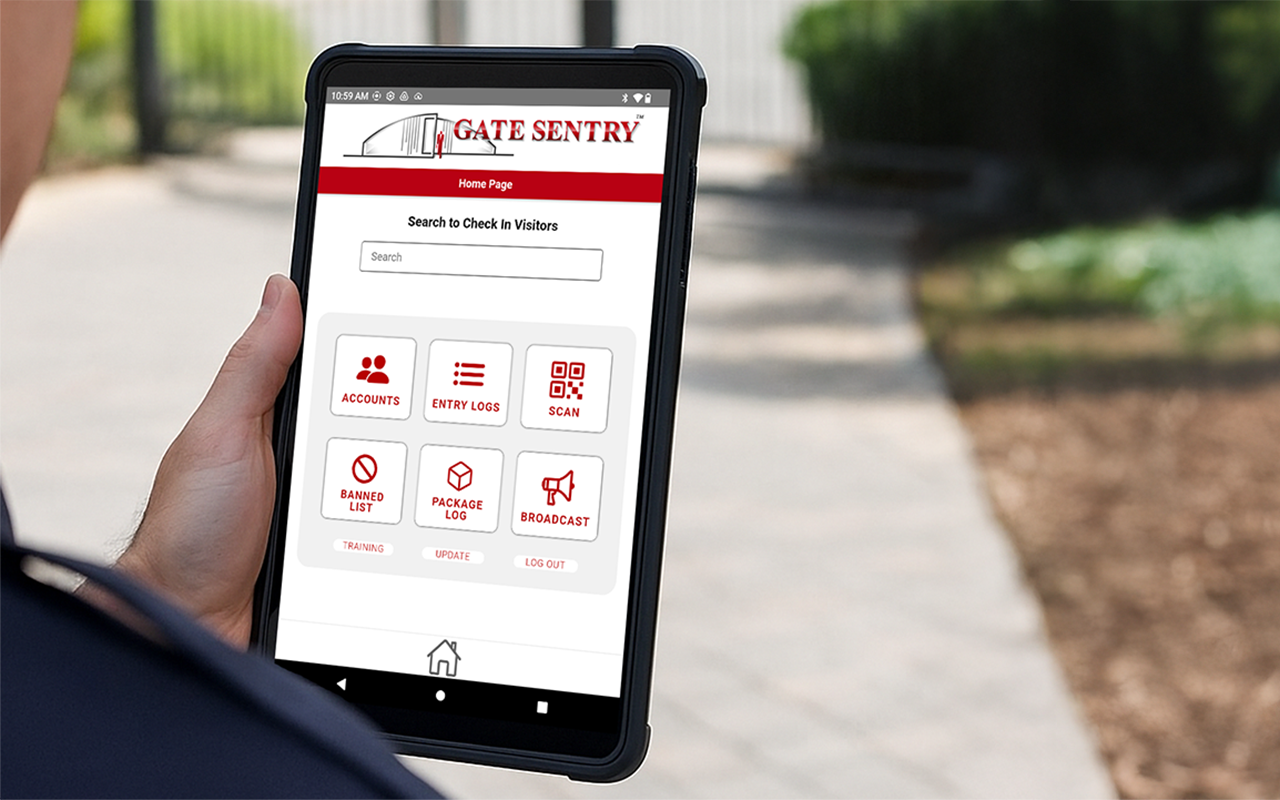
With Gate Sentry, expected visitors can be registered in advance, and the security officer can review their information from the tablet.
The officer can also capture identification and vehicle details during check-in, according to the property's procedures.
That information becomes part of the visitor record and can be available for future visits.
Instead of working from a basic list of names, security has more information to reference when confirming who's arriving.
Giving Guests a SentryPass Before They Arrive
Another way resorts can make arrivals easier is by sending guests their access information ahead of time.
With SentryPass, authorized staff can send visitors a digital gate pass by text or email.
Guests can open the pass on their phone or save it to Apple Wallet or Google Wallet.
When they reach the resort entrance, they show their pass to the security officer, who scans it using the Gate Sentry tablet.
The scan pulls up the visitor information already on file.
That can include the visitor's name, the address or destination associated with the visit, and any identification or vehicle details previously recorded.
The security officer can review that information and verify that the person arriving matches the registration.
For guests who have stayed at the property before, having information already on file can make the process easier.
And for someone visiting a resort for the first time, receiving a pass in advance makes the arrival process more straightforward.
They know they have been registered and have something ready to show when they reach the gate.
The officer still follows the property's verification procedures, but doesn't have to start searching through a separate guest list or call the front desk just to find the reservation. For more on the guest side of this, see mobile wallet visitor passes.
Managing Spa Appointments, Restaurant Guests, and Day Passes
Not everyone coming through a resort gate is staying overnight.
Someone might be visiting for a massage, meeting friends at a restaurant, spending the afternoon at the pool, or attending an event.
These visitors may only need access for a few hours.
For resorts that offer day passes or allow non-overnight guests to use certain amenities, keeping those visits organized can be challenging.
The spa might know someone has an appointment at 2 p.m., but security needs to know that person is expected before they arrive.
With Gate Sentry, authorized departments can register guests and manage their approved visit periods through the portal.
For example, a resort could issue a visitor pass for a spa appointment or register guests expected for a special event.
If plans change, authorized staff can update the visitor information without having to send a new handwritten list to the gatehouse.
And when the guest arrives, security can see the registration and complete check-in.
For properties with frequent day-pass traffic, the system also gives management a record of arrivals and pass activity.
Tracking exactly how many guests remain on-site, however, would require a reliable way to record departures as well.
The Gatehouse Shouldn't Have to Manage Every Department's Visitors
One of the biggest things we took away from the conversation with the club security director was how much extra work falls on security when departments can't manage their own visitors.
Security officers are already responsible for checking identification, confirming authorization, monitoring the entrance, and handling unexpected arrivals.
They shouldn't also have to spend their shifts manually entering guest lists for every department at the property.
With Gate Sentry, administrators can assign appropriate permissions to different users.
That means the front desk, concierge, restaurant, or other authorized teams can help maintain their own visitor information.
Security still has visibility at the entrance, and management can control which employees have access to the system and what they're allowed to do.
The resort doesn't need to give every department unrestricted access to everything.
It can give employees access appropriate to their responsibilities while keeping visitor management organized through one platform.
This is especially helpful for properties where departments have different schedules and visitor traffic changes throughout the day.
Keeping Track of Returning Guests and Vendors
Resorts also have a lot of repeat visitors.
Some guests return every season. Others come regularly for dinner or spa appointments. And many properties work with the same vendors throughout the year.
With paper lists, each visit may involve starting the check-in process over again.
Gate Sentry keeps digital visitor records that authorized staff can search when needed.
When someone returns, security can review information already collected during a previous visit, including available identification or vehicle details.
For vendors, management can also review recorded visits and update permissions as needed.
If a contractor finishes a project and no longer needs access, their authorization can be removed.
And if someone asks about a vendor who entered the property earlier in the week, management can search the available check-in records rather than going through old paper lists.
For a resort with multiple departments and frequent outside service providers, having that information organized in one place can be particularly useful.
Does a Resort Need to Replace Its Existing Gates?
Not necessarily.
If the resort already has staffed entrances and functioning gate equipment, updating visitor management doesn't automatically mean replacing the physical gates.
Gate Sentry is built around a tablet-based check-in process.
Security officers can manage visitor registrations, scan SentryPasses, capture identification, and record arrivals through the tablet.
The software also includes an admin portal where authorized staff can manage visitor information and review activity.
That can reduce the need for desktop-based check-in systems, separate barcode printers, and handwritten visitor lists.
The exact setup depends on the property's existing equipment and requirements, but resorts can often improve how visitors are managed without taking on a major gate replacement project.
Making the First Arrival Easier
For someone arriving at a resort, the entrance is one of the first interactions they have with the property.
They might have just spent hours traveling, be arriving for a dinner reservation, or be looking forward to a weekend away.
The last thing they want is to sit at the gate while someone tries to find their name on a list or calls the front desk to confirm their reservation.
And for the security officer, it's frustrating when the information exists somewhere within the resort but hasn't made it to the entrance.
That's really what this comes down to.
The front desk knows who's checking in. The spa knows who has appointments. The restaurant knows who's coming for dinner.
Security should have access to the visitor information those departments have been authorized to share, without having to chase it down every time someone arrives.
With Gate Sentry, resorts can keep guest registration organized, let authorized departments manage their visitors, and give security officers the information they need at check-in.
And with SentryPass, guests can arrive with a digital pass that's easy to find and scan.
For guard-gated resorts and private clubs managing several types of visitors every day, that can make the arrival process much easier for everyone involved. For a full overview, see visitor management for resorts, clubs, and marinas.
See How Gate Sentry Works for Resorts and Private Clubs
Does your resort still rely on separate guest lists, emails, or calls to the gatehouse to manage arrivals? We'd be happy to show you how Gate Sentry helps departments coordinate visitor access while giving security officers a simpler way to check guests in.
Schedule a Demo