
Visitor Management Software Comparison: 2026 Buyer's Guide
The Quick Summary
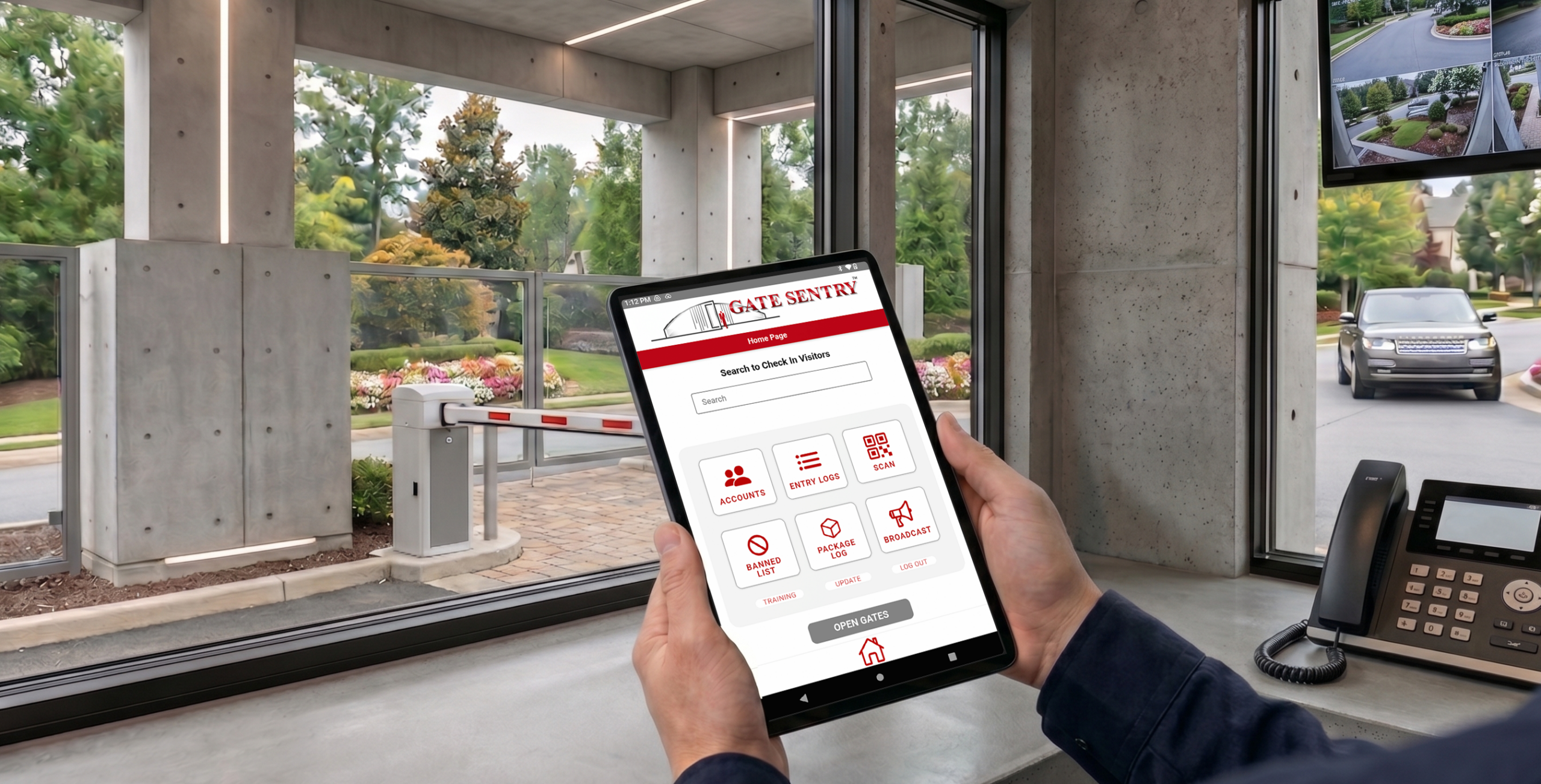
The real choice in visitor management software for HOAs isn't between brand names. It's between two distinct architectures. Some systems rely on expensive, failure-prone gatehouse hardware, on-site servers, or massive physical kiosks. Modern systems leverage cloud-based, smartphone-first software.
Eliminating physical hardware improves resident adoption, ensures 100% guard uptime during power outages, and dramatically lowers the total cost of ownership (TCO).
What This Guide Covers
- Why gated community boards are rethinking security hardware
- Resident experience: driving app adoption
- Visitor experience: first impressions matter
- Administrative oversight: HOA security controls and compliance
- Guard operations: maintaining gate security during power outages
- Cost and deployment: fast rollouts without proprietary hardware
- Frequently asked questions
Why Gated Community Boards Are Rethinking Security Hardware
The annual invoice for your visitor management system is rarely the true cost. The real expense is the hidden hardware footprint stacked on top of it:
- The aging gatehouse PC running an operating system Microsoft stopped supporting years ago.
- The on-site server humming in a closet, constantly generating IT service tickets.
- The proprietary equipment racks at the entrance requiring a specialized contractor every time a wire shorts.
Alternatively, communities trying to automate often get trapped by giant virtual-guard kiosks planted at the entrance. These incredibly expensive boxes frequently suffer from screen fogging in high humidity, frozen internal components in the winter, and recurring "out of service" weekends. You're paying a premium subscription for a remote-guard service hosted inside a box that doesn't work half the time it's supposed to.
Gate Sentry was founded in 2012 by Michael Rendon, a former HOA board president who experienced these exact frustrations firsthand. Launched in Texas in 2015, Gate Sentry now secures hundreds of communities across more than 25 states. The tables below highlight the operational gap between Gate Sentry's cloud architecture and traditional hardware-sprawl or virtual-kiosk platforms.
Resident Experience: Driving App Adoption in Gated Communities
Residents are the ones pre-authorizing guests so security knows who is coming. When your software makes that process simple, the guard already has the visitor's information the moment they pull up to the gate.
Real-time updates between the resident's app and the guard's tablet are critical: the moment a resident adds, removes, or changes a guest, security needs to see it instantly, not on a sluggish 15-minute sync cycle. When software is slow or clunky, residents stop adding guests entirely and start calling the gatehouse directly. This clogs the phones, slows down entries, and creates long lines at the gate. A functioning system must give residents both a lightning-fast mobile app and a full web portal.
| Resident Feature & Capability | Gate Sentry | Visitor Management System Competitors |
|---|---|---|
| Smartphone gate access for residents | ✓ | Partial |
| Real-time push notifications (guest check-in) | ✓ | Partial |
| App rating (thousands of user reviews) | 4.8+ ★ | 1.0 to 2.5 ★ |
| SentryPass mobile wallet integration | ✓ | ✗ |
| Multi-property account access (snowbirds) | ✓ | ✗ |
| Events feature (guest lists & time windows) | ✓ | Partial |
App store ratings are the truest metric of a system's success. Gate Sentry maintains a 4.8-star rating across thousands of reviews because residents actually want to use it.
With SentryPass, residents pre-authorize guests by sending an Apple Wallet or Google Wallet pass directly to their phones. Guests show up, the guard scans the pass, and they are through in three seconds. Once a resident's guests start arriving like VIPs instead of waiting in line, every other neighbor wants to download the app too.
The events feature lets residents upload an entire guest list at once with custom arrival time windows, perfect for birthdays, holiday parties, graduations, or country club tournaments. Combined with multi-property accounts for snowbirds, real-time sync, and a clean web portal, the platform stops feeling like a clunky security tool and starts feeling like a modern community amenity.
Gated Community Visitor Experience: First Impressions Matter
A visitor's first impression of your neighborhood happens at the front gate. Older platforms often leave guests idling in their cars, staring at a frozen kiosk screen waiting for a remote agent to connect, or watching a guard walk back into the gatehouse to slowly type their information into a desktop PC.
Furthermore, some systems still require visitors to hand over a driver's license to be physically scanned, a practice that runs afoul of strict consumer privacy and data retention laws in a growing number of states. None of this provides a welcoming entry experience.
| Visitor Experience Feature | Gate Sentry | Visitor Management System Competitors |
|---|---|---|
| Mobile wallet SentryPass compatibility | ✓ | Partial |
| Time-limited, single-use visitor codes | ✓ | Partial |
| VirtualKeypad entry with built-in intercom | ✓ | ✗ |
Gate Sentry replaces physical friction with a high-end VIP pass that lives natively in the guest's digital wallet. The resident texts them the pass, the guard scans it, and the gate arm goes up. No clipboards, no paper forms, no handing over physical IDs, and no manual typing.
The VirtualKeypad Advantage
Many vendors attempt to sell HOAs physical kiosk towers costing tens of thousands of dollars, requiring dedicated power lines, data drops, and constant maintenance contracts. Gate Sentry's VirtualKeypad performs the exact same function directly from the visitor's smartphone. The guest types a secure code, utilizes the built-in intercom to connect with the resident, and triggers the gate. No physical tower, no construction, and no service tickets.
Administrative Oversight: HOA Security Controls and Compliance
While most software can handle basic entry logs during a sales demo, property managers need robust tools when real-world challenges arise, such as managing banned individuals, handling delinquent assessments, or restricting vendor hours.
| HOA Administrative Capability | Gate Sentry | Visitor Management System Competitors |
|---|---|---|
| Searchable digital entry logs | ✓ | ✓ |
| Custom access hours for vendors & amenities | ✓ | Partial |
| Send broadcasts (email & in-app message) | ✓ | Partial |
| Digital parking pass issuance | ✓ | Partial |
| Suspend resident access for rules violations | ✓ | Partial |
| Portfolio-wide ban across multiple communities | ✓ | ✗ |
The everyday administrative tools matter just as much as the headline features. Gate Sentry lets managers send immediate broadcasts to the community via email or in-app push messages, the right channel for the right moment, whether it's a routine pool closure or an urgent hurricane evacuation order.
Account restrictions allow managers to suspend a resident's automated guest privileges with one click when they are behind on assessments or in violation of community rules, then restore them instantly once resolved. Custom access hours prevent landscape crews from waking the community up at 6 a.m. and keep amenities secure after hours without needing a physical guard at every single entrance.
For property management groups overseeing multiple communities, Gate Sentry is built for the way you actually scale. Managers can oversee every community in their portfolio through a single login, switching between properties without juggling separate accounts or credentials. Portfolio-wide bans work the same way: if an individual is banned from one property, that restriction automatically applies across every other community the management company runs. Competitors expect your staff to manually flag the same person at every property separately and hope the front-gate teams remember.
Guard Operations: Maintaining Gate Security During Power Outages
Older architecture assumes a best-case scenario: perfect internet connectivity, continuous power, and a functioning gatehouse PC. If any of those elements fail, especially during severe weather, the entire security infrastructure collapses.
| Guard & Security Operations | Gate Sentry | Visitor Management System Competitors |
|---|---|---|
| Tablet-based guard workflow (no PC required) | ✓ | Partial |
| 3-second check-in via wallet pass scan | ✓ | ✗ |
| 100% full offline operation during outages | ✓ | ✗ |
| In-app certified security training | ✓ | ✗ |
| In-app private resident calling | ✓ | ✗ |
True Offline Functionality
During power or network outages, Gate Sentry tablets continue running completely offline. Guards can still screen visitors and scan digital wallet passes without interruption. The entry logs automatically sync back to the cloud the moment connectivity is restored. Traditional platforms typically go completely dark when their cloud connection drops, leaving your community vulnerable when security matters most.
Cost and Deployment: Fast Rollouts Without Proprietary Hardware
Because hardware-first vendors operate on a hardware-centric business model, their margins are tied to selling physical equipment. Gate Sentry uses a hardware-free software model that integrates seamlessly with your existing infrastructure.
| Cost & Deployment Metrics | Gate Sentry | Visitor Management System Competitors |
|---|---|---|
| Hardware-free cloud architecture | ✓ | ✗ |
| Compatible with preferred gate installers | ✓ | Partial |
| Standard go-live window | 30 to 45 Days | 3 to 6 Months |
With Gate Sentry, you keep your current gate operators and preferred local technicians. Because there are no data cables to trench or proprietary panels to install, a standard deployment takes just 30 to 45 days, compared to the multi-month timelines typical of hardware-heavy rollouts.
Conclusion: The Question Every HOA Board Should Ask
Your residents carry smartphones, your guards know how to operate tablets, and your visitors use digital wallets. Expensive on-site servers, gatehouse PCs, and massive entry kiosks are no longer solving problems that the devices in everyone's pockets can't handle more efficiently and reliably.
By eliminating physical hardware vulnerabilities, communities can drastically lower their total cost of ownership while upgrading their overall security posture.
See the comparison for your community.
Get a side-by-side demo of Gate Sentry against your current visitor management system. We'll walk your board through every line of this comparison and show you exactly what your community would save.
Schedule a Board DemoFrequently Asked Questions
What is hardware-free visitor management?
It is a cloud-based security model that runs entirely on standard smartphones and tablets, eliminating the need for dedicated gatehouse PCs, local servers, or expensive entry kiosks.
Can we use our existing gate hardware?
Yes. Gate Sentry operates independently of your physical gates, meaning you do not need to replace your current gate operators or switch your preferred gate service technician.
How do guards process visitors if the internet goes down?
Gate Sentry's tablet applications feature full offline capability. Guards can continue screening guests and scanning passes without interruption; all entry logs sync automatically once the connection is restored.