
The Hidden Costs of Hardware-Based Gate Access Control
We recently spoke with a community security committee member who spent years installing access control equipment. When the conversation turned to keypads, he had a pretty strong opinion.
He called them "probably the highest problem device there is."
And after hearing some of his experiences, it's easy to understand why.
He described installing outdoor keypads that were completely sealed to protect them from the weather.
"Everything was in silicone, and we'd get a call a month later… we'd go out there, replace it, and bring back the bad unit, and you would find moisture inside of it."
Even with precautions taken during installation, the equipment was still failing.
As he put it, "Mother Nature will do what it wants with things sitting outside."
And then there's vandalism, which creates another set of problems.
It's something property managers and HOA boards don't always think about when they're choosing an access control system. The cost of installing equipment is one thing. Keeping it working year after year is another.
That's one of the reasons we've focused on developing software-first access control solutions like Sentry Solo, which allow communities to manage unmanned entrances without relying on traditional callboxes, keypads, or fobs.
The Cost of Access Control Doesn't End After Installation
When a community starts looking at a new gate access system, the initial price is usually one of the first things discussed.
How much does the equipment cost? Will the community need new wiring? Does the installation require trenching or replacing the existing pedestal?
Those are all important questions, especially when an HOA is working within a set budget.
But the upfront cost isn't the only thing worth considering.
Traditional unmanned access systems often rely on outdoor equipment like callboxes, intercoms, keypads, and card readers. Depending on the property, installing or upgrading that equipment may involve electrical work, wiring, contractors, and ongoing maintenance.
Then, a few years down the road, something stops working.
Maybe the keypad isn't responding, the callbox has connection problems, or an older component needs to be replaced.
Now management has to schedule a service call, coordinate repairs, and figure out how residents and visitors are supposed to get through the entrance in the meantime.
And depending on the equipment, finding replacement parts or getting a technician out to the property can become another expense.
For communities with several unmanned entrances, those costs can add up.
When Fixing One Entrance Becomes an Ongoing Project
Another conversation we had with a security committee chair at a waterfront community really showed how complicated these projects can become.
He was describing one of the community's unmanned gates and the work they'd done over the years to improve it.
"It's been a big headache. We used to have a hard line there, and it kept going down… We got cellular service, and… replaced the pedestal as well, so we've replaced the gate itself."
After changing the communication connection, replacing the pedestal, and replacing the gate, he said:
"It's not perfect, but it's a lot better than it was a few years ago."
That's a lot of work for one entrance.
And it's a good example of why communities need to consider more than the price of the access control equipment itself.
Every repair or replacement can mean another contractor, another expense, and more time spent dealing with an entrance that isn't operating the way it should.
Of course, not every community is going to have these problems. Some traditional systems work well for years.
But when equipment does start failing, the cost of maintaining it can become a much bigger part of the budget than anyone originally expected.
Why Outdoor Access Equipment Can Be Difficult to Maintain
Going back to the security committee member's experience with keypads, one of his biggest frustrations was that even properly installed equipment could fail.
And outdoor access equipment has a lot working against it.
Depending on where a community is located, keypads and callboxes may be exposed to heavy rain, humidity, extreme heat, freezing temperatures, or salt air.
They're also used constantly.
Residents enter codes, delivery drivers press buttons, and visitors interact with the equipment throughout the day.
Over time, components can wear out or become damaged.
The committee member also brought up vandalism, which is another issue communities may have to consider.
Even when the gate itself is in good condition, a damaged keypad or malfunctioning callbox can create problems for everyone trying to enter.
And if the equipment needs to be replaced, the HOA may be paying to repair a system that's already several years old.
It's worth asking whether every entrance really needs that amount of equipment in the first place.
A Different Approach With Sentry Solo
Sentry Solo was developed to give communities another option for managing unmanned entrances.
Instead of requiring a traditional callbox or keypad at every entrance, it uses mobile-based access methods that work with compatible existing gate infrastructure.
Residents can open approved entrances using VirtualKey in the Gate Sentry app.
Guests can receive a SoloPass, which gives them a link they can use to open an approved entrance without downloading an app, creating an account, or remembering a gate code.
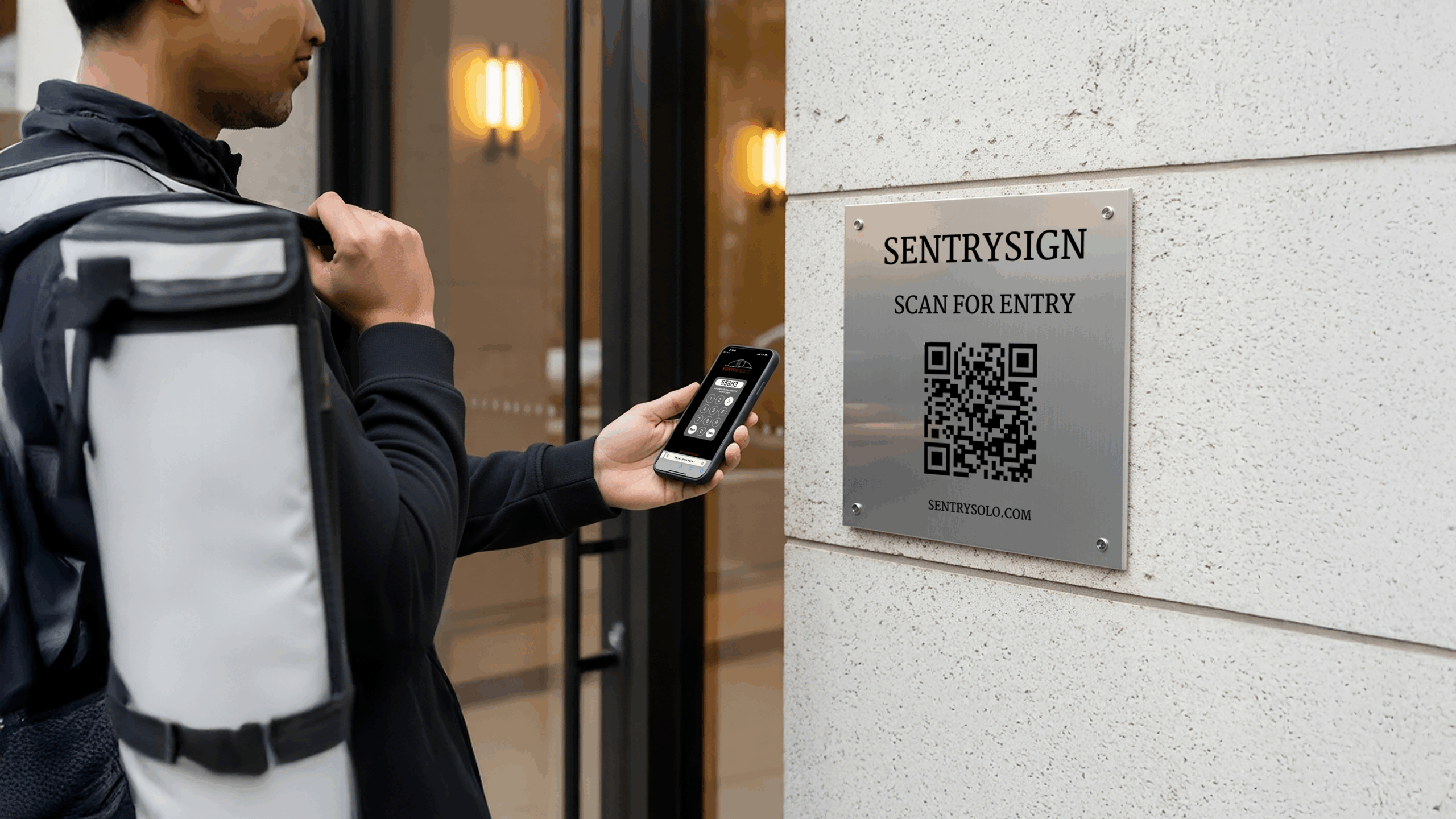
Vendors can use their assigned access codes through VirtualKeypad. They scan a SentrySign QR code at the entrance, which opens the keypad in their phone's browser.
For a community with an existing automatic gate that's in good working condition, this can mean upgrading how people access the property without replacing the entire gate system.
Depending on the existing equipment, a relay add-on may be needed to connect Sentry Solo to the entrance.
The physical gate, operator, and other necessary equipment still need to work, but communities may be able to avoid installing or maintaining many of the traditional access devices that visitors and residents would otherwise use.
And because access is managed through software, administrators can update permissions without having to physically reprogram equipment at the entrance.
What Does This Mean for Long-Term Costs?
One of the biggest benefits of a software-first system is reducing how much equipment the community has to purchase and maintain.
Think about an HOA that's considering replacing several aging callboxes.
With a traditional replacement, the community may have to account for the cost of the new devices, installation labor, wiring, and any changes needed to accommodate the equipment.
Then there's the ongoing expense of servicing those devices.
With Sentry Solo, a community that has compatible existing gates may be able to use its current infrastructure while changing how residents, guests, and vendors gain access.
That can help avoid some of the installation and maintenance costs associated with traditional callboxes and keypads.
But it's important to look at the full picture.
Software still has costs, including subscription fees, any required connectivity, and the equipment needed to operate the gate itself.
The real comparison is what the community will spend installing, operating, maintaining, and eventually upgrading each system over time.
For an HOA planning its budget over the next five or ten years, that can be more useful than comparing installation quotes alone.
Less Equipment to Maintain, More Control for Management
Maintenance costs aren't the only consideration.
There's also the time property managers spend dealing with access problems.
If a visitor can't get through because a callbox isn't working, someone may need to help them. If a resident forgets a code or a credential needs to be changed, management may have to get involved.
With Sentry Solo, residents can manage their own guests and vendors through Gate Sentry, and access permissions can be updated through the admin portal.
For example, if a vendor should only have access during certain hours, management can configure those restrictions in the system.
If someone's access needs to be removed, administrators can update their permissions without having to replace a physical credential.
Gate Sentry also records access activity associated with the platform, giving management a way to review when credentials were used.
That can be useful when questions come up about who accessed an entrance or whether someone had permission to enter.
These are everyday tasks, but they're worth considering when evaluating how much work a system creates for the people managing it.
What Should Communities Consider Before Replacing Their Access Equipment?
If your community has an aging callbox, keypad, or other unmanned access system, it's worth reviewing what's actually causing problems before deciding what to replace.
For example, is the gate itself failing, or is it the equipment people use to open it?
Those are two very different issues.
If the gate operator is in good condition but the keypad regularly needs repairs, replacing the entire entrance may not be necessary.
It also helps to look at how often the community has needed service calls and what those repairs have cost.
Maybe the current equipment has worked well for years. Or maybe management has spent more time coordinating repairs than anyone expected.
For communities with several entrances, it's worth reviewing each one individually. The main gate may have completely different needs from a back entrance that only residents use.
The goal should be finding a system that works with the property's existing infrastructure where possible, meets the community's access requirements, and doesn't create unnecessary maintenance work.
Is a Software-First Approach Worth It?
The security committee member who spent years replacing outdoor keypads made an interesting point about how difficult it can be to keep equipment working outside.
And the waterfront community's experience showed how much time and money can go into improving just one entrance.
These are the kinds of issues communities should think about before investing in another traditional access system.
For some properties, existing equipment may still be the best fit. But for communities that are tired of maintaining aging keypads, replacing callboxes, or dealing with expensive upgrades, a software-first approach is worth considering.
Sentry Solo allows compatible properties to keep their existing gates while managing access through mobile-based credentials and software.
That means fewer traditional access devices to maintain, more flexibility for residents and management, and potentially lower installation and long-term maintenance costs.
And for an HOA that's already spent years dealing with repairs at the same entrance, avoiding another major hardware project can be a pretty big benefit.
See How Sentry Solo Works
Thinking about replacing your community's aging callboxes or keypads? We'd be happy to show you how Sentry Solo works with existing gate infrastructure and what a software-first approach could look like for your property.
Schedule a Demo