
Visitor Tracking Software: How It Works for Properties
A property manager needs to find out when a contractor last visited the community.
The security team remembers the company, but nobody knows the exact date.
If the property uses paper logs, someone may need to search several binders to find the entry.
If the records are digital, management can search for the information instead.
That's one of the main reasons properties use visitor tracking software.
The purpose isn't simply to record more information. It's to make visitor records easier to collect, find, and review when someone needs them.
For gated communities, apartment buildings, and commercial or industrial properties, that can make a real difference in how much time staff spend dealing with previous visits.
What Is Visitor Tracking Software?
Visitor tracking software, sometimes called a guest tracking system, records information about people visiting a property.
Depending on the system and the property's procedures, that can include a visitor's name, company, destination, arrival time, vehicle information, and departure time.
Some systems also support identification capture, guest registration, and notifications when someone arrives.
The information is stored digitally instead of being written in a logbook.
With Gate Sentry, security officers can check visitors in from a tablet, while authorized administrators can review the available records through the online portal.
At compatible unmanned entrances, Sentry Solo records supported access activity when residents, guests, or approved vendors use their credentials.
Those aren't identical processes.
A staffed entrance may include a security officer reviewing identification. An unmanned entrance records the use of an authorized access method without an officer physically checking the person entering.
That difference matters when deciding what a visitor record can tell you.
How Visitor Tracking Software Works
The process depends on whether the entrance has on-site security.
At a Staffed Gate
A resident registers an expected visitor through the Gate Sentry app or web portal.
The guest may receive SentryPass, a digital pass that can be saved to Apple Wallet or Google Wallet.
When they reach the gate, the security officer scans the pass on the tablet to bring up the registration.
The officer reviews the information and completes whatever identification or approval checks the community requires.
When the visitor is checked in, the arrival is recorded in Gate Sentry.
Residents can also receive arrival notifications through the community's configured notification methods.
For someone who visits regularly, the officer can search available previous information instead of starting from scratch.
That can reduce duplicate data entry without removing the security officer's responsibility to follow the property's check-in procedures.
At an Unmanned Gate
At an entrance without security personnel, access works differently.
With Sentry Solo, residents use VirtualKey in the Gate Sentry app to open approved entrances.
Guests can use SoloPass or VirtualKeypad, depending on how their access is configured.
SoloPass gives invited guests a mobile link that lets them open an authorized entrance without downloading an app or entering a code.
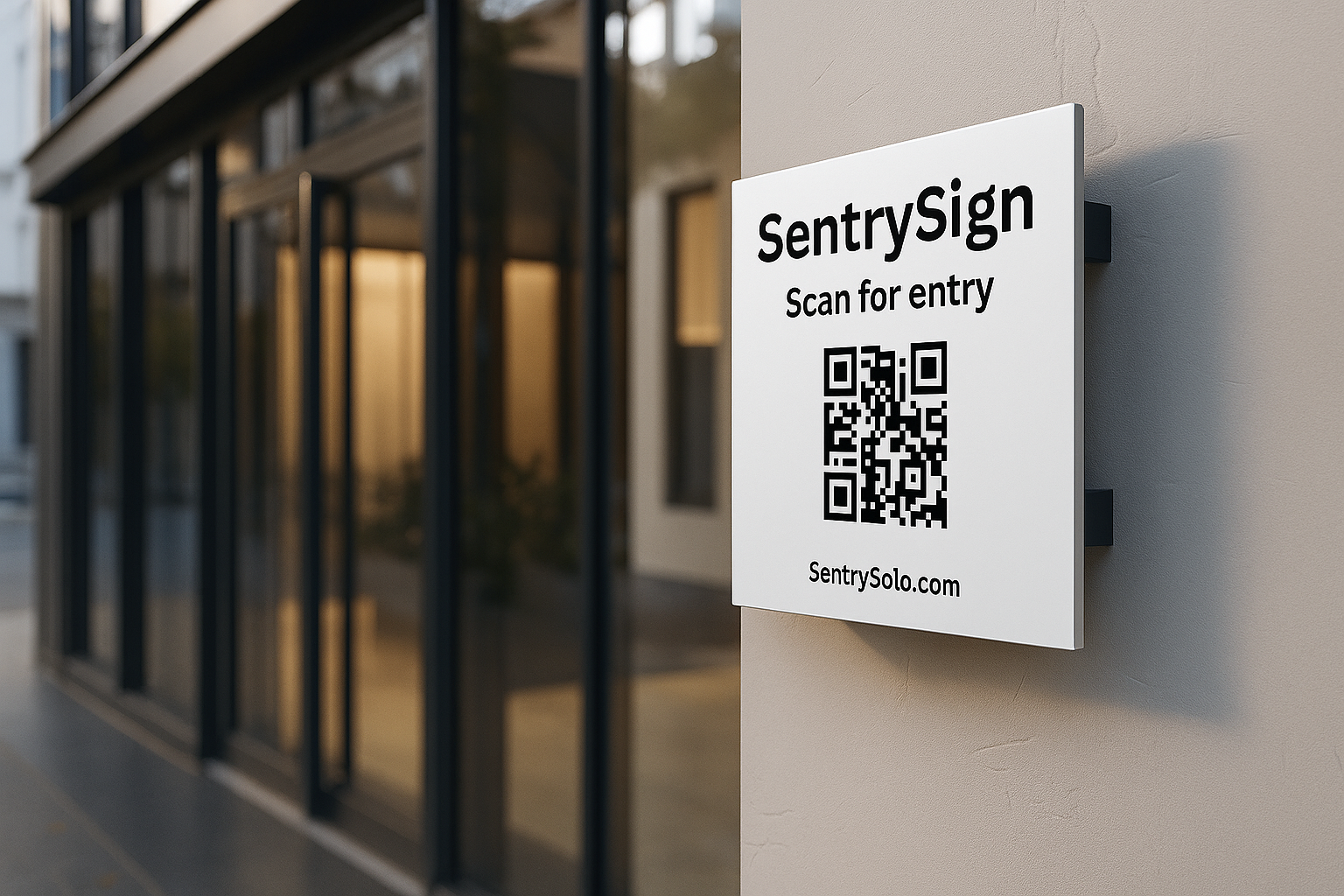
Guests using VirtualKeypad scan the SentrySign QR code, open the keypad in their phone's browser, and enter their assigned code.
Approved vendors can use VirtualKeypad as well, with credentials and permissions appropriate for their visits.
The system records supported access activity associated with those methods.
An access record can show which credential was used and when. It doesn't independently confirm who was physically present at the gate.
That distinction is especially important at unmanned entrances.
Paper Logs vs. Digital Visitor Tracking
Paper logs can work when the property has a small number of visitors and consistent procedures.
The difficulty usually appears when someone needs to find old information or when several people are responsible for maintaining the records.
Here's how the two approaches compare.
| Task | Paper visitor log | Digital visitor tracking |
|---|---|---|
| Recording arrivals | Staff writes information by hand | Staff completes digital check-in or the system records supported access |
| Finding past visits | Search through previous pages | Search available digital records |
| Returning vendors | May need to fill out information again | Existing visitor details may be available |
| Recording departure | Staff manually enters it | Check-out can be recorded through supported workflows |
| Access to records | Depends on where logbooks are stored | Authorized users access records through the system |
| Reviewing visitor history | Manual review | Search and reporting tools |
| Correcting missing information | Requires a manual update | Depends on the system's permissions and record procedures |
A digital system won't make incomplete information accurate.
But it can reduce the amount of paperwork involved and make the information that was collected easier to use.
Key Features to Look for in Visitor Tracking Software
Not every property needs the same features.
A commercial site receiving contractors may have different requirements from a residential community where most visitors are personal guests.
These are some of the capabilities I'd compare.
Searchable Visitor Records
A property manager should be able to find previous visits using the information available in the system.
That might include a visitor's name, company, date, resident, or license plate if one was recorded.
Searchable history is particularly useful when someone needs information weeks or months after the visit.
Digital Guest Registration
Allowing residents or employees to register visitors before they arrive can save time at check-in.
Security already has a record of who is expected and who authorized the visit.
If someone arrives without a registration, the property still needs a process for requesting approval.
Identification and Vehicle Information
Some properties require security officers to collect identification or vehicle information.
A tablet can make that easier than writing details on paper or keeping separate copies.
The information collected should match the property's requirements and privacy procedures.
Arrival Notifications
Residents may want to know when a guest reaches the gate.
Gate Sentry supports arrival notifications through configured channels, helping residents stay informed without contacting security to ask whether someone has checked in.
Staffed and Unmanned Entrance Support
Some properties have more than one type of entrance.
For example, security may staff the main gate while a secondary gate is reserved for resident or approved visitor access.
It's helpful when the software supports those different workflows and gives management a way to review the available activity in one platform.
Multi-Property Management
Companies managing several properties may need to review information across different locations.
A centralized portal can make that easier than maintaining a separate set of records at every site.
Access permissions should still determine which information each administrator is allowed to see.
What Visitor Tracking Records Can and Can't Tell You
This is worth understanding before choosing software.
A digital check-in record can show when a security officer recorded someone's arrival.
If the officer collected identification or vehicle information, those details may also be available.
A mobile credential record can show that an authorized access method was used at a particular entrance.
But neither record automatically proves everything that happened afterward.
It may not tell you which building the visitor entered, how long they remained at a particular location, or whether another person followed them through the gate.
And if a departure wasn't recorded, management shouldn't assume the system knows when the visitor left. For how departures are recorded, see guest check-in and check-out.
The value of visitor tracking comes from having better records of the activities the property actually documents.
The software should make those records available without overstating what they prove.
Visitor Tracking for Vendors and Contractors
Vendors can account for a substantial amount of traffic at some properties.
Landscaping crews, maintenance companies, delivery drivers, and other service providers may visit regularly.
At a residential community, security might need to know which household or area they're visiting.
At a manufacturing facility, management may need a record of when a contractor arrived.
We've spoken with industrial facilities that wanted better entry and departure records because outside contractors billed for time spent on-site.
Visitor tracking can provide information to review alongside an invoice.
But recorded time on-site isn't the same as verified labor hours.
That makes accurate check-in and check-out procedures important.
For returning vendors, having previous records available can also reduce the need to collect the same basic information during every visit.
How Visitor Tracking Helps With Previous Incidents
A resident reports that a vehicle entered the property on a particular afternoon.
Management wants to review the visitor records from that period.
If the information is stored in paper logs, the security team may have to search through several pages or binders.
With digital records, authorized administrators can look up the relevant date and review available entries.
If a license plate, visitor name, or company was captured during check-in, that information may help narrow the search.
It won't necessarily identify every vehicle or person who entered.
But having a searchable record gives management a more practical place to start.
Visitor Tracking at Different Types of Properties
Gated communities: Security can review guest registrations, returning vendors, and previous visits at staffed gates. Sentry Solo can record supported access activity at compatible unmanned entrances.
Apartments and condos: Properties may need records of visitors using gates, garages, or other controlled entrances.
Commercial buildings: Reception or security teams may check in contractors, employees' guests, and other visitors.
Manufacturing and industrial facilities: Security can record visits from technicians, suppliers, drivers, and contractors.
Resorts and amenities: Properties may need to manage guest access at entrances or controlled facilities.
Each property needs to decide which information matters and how it should be collected.
Frequently Asked Questions
What is visitor tracking software?
Visitor tracking software is a system for recording and reviewing visitor activity, including check-ins, available visitor details, and departures when recorded.
What is the difference between visitor tracking and visitor management?
Visitor tracking focuses on the records of visitor activity. Visitor management also includes processes such as registration, authorization, notifications, and controlling access.
Can visitor tracking software record vendors and contractors?
Yes. Depending on the system and entrance setup, it can record their visits and provide searchable history for future reference.
How do guests use Sentry Solo at unmanned entrances?
Guests may use SoloPass or VirtualKeypad. SoloPass allows entry through a mobile link, while VirtualKeypad lets guests use an assigned code on their phones. The option depends on how their access is configured.
Does visitor tracking software automatically verify identity?
No. A digital record or access credential doesn't automatically establish someone's identity. Verification depends on the property's procedures and the capabilities being used.
Can managers see whether someone has left?
They can review recorded departures where check-out is supported and completed. An entry record alone doesn't establish that a visitor is still on-site.
Does Gate Sentry support both staffed and unmanned entrances?
Yes. Gate Sentry supports security officer check-in at staffed entrances, while Sentry Solo provides mobile access at compatible unmanned gates and doors.
See Visitor Tracking Software in Action
If your team spends time searching through paper logs, checking old visitor lists, or tracking down information about previous visits, we can show you how Gate Sentry organizes those records. We'll demonstrate digital check-in, returning visitor searches, and the access information available to property administrators.
Schedule a Demo