
Manufacturing Visitor Management System: What to Look For
A manufacturing plant can have several different types of visitors arriving before the workday even gets started.
A maintenance contractor is there to repair equipment. A supplier is meeting with purchasing. A delivery driver needs to find the shipping department, and an outside technician is expected at a different building.
They all have a reason to be there, but they aren't necessarily going to the same place or meeting the same person.
And security needs to know who's arriving, whether they're authorized, and where they're supposed to go.
That's why choosing a manufacturing visitor management system is different from choosing software for a typical office lobby.
At a manufacturing facility, visitor check-in might happen at a vehicle entrance, a security checkpoint, or a front office. The property may also have separate entrances for employees, deliveries, and contractors.
Some plants need to collect identification and license plate information. Others want visitors to answer screening questions or submit documents before arriving.
The right visitor management system should handle those requirements without making security officers spend their shifts searching through records or calling around the facility.
What Should a Manufacturing Visitor Management System Actually Do?
At its simplest, visitor management software helps a facility keep track of people who don't work there but need permission to enter.
That includes contractors, vendors, delivery drivers, suppliers, and guests.
But for a manufacturing plant, writing someone's name and arrival time in a digital log isn't necessarily enough.
Security may also need to know which department is expecting them, what company they work for, what vehicle they're driving, and whether someone has approved their visit.
And when that person leaves, the facility may want a record of their departure.
A useful system should make those everyday tasks easier.
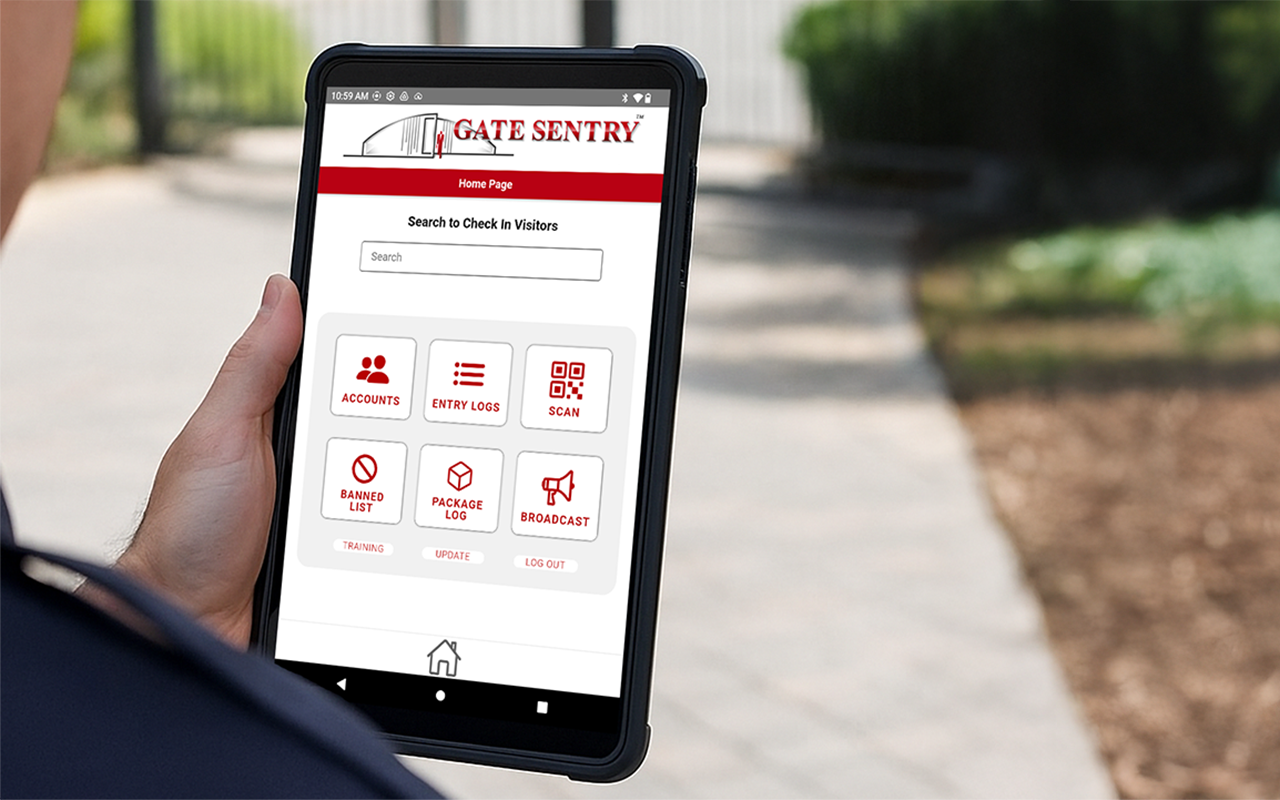
With Gate Sentry, security officers can manage visitor check-ins from a tablet while authorized employees and administrators manage visitor information through the portal.
That gives the people working at the gate access to the information they need without having to rely on separate paper logs or lists maintained by different departments.
1. Security Should Be Able to Find Visitors Without Knowing Every Detail
One of the first things I'd look at in any factory visitor management system is how easily security can find someone.
Say a contractor arrives and tells the security officer they're meeting with maintenance.
They might not remember the employee's last name. Maybe they only know the department or the company that scheduled the work.
Security still needs a way to find the right visit.
With Gate Sentry, officers can search by information such as the visitor's name, company, employee, department, or license plate.
If someone has visited before, the officer can pull up their existing record rather than entering everything again.
Authorized employees and departments can also register expected visitors ahead of time.
For example, maintenance can add a technician scheduled for an equipment repair, while purchasing can register a supplier coming in for a meeting.
When those visitors arrive, security has information to reference instead of having to figure out which department to call.
Unexpected visitors still need to go through the facility's normal authorization process. But the software should make finding people and contacting the right employees easier.
2. Check-In Needs to Work Where Security Is Actually Stationed
An office visitor management system may be designed around someone walking up to a reception desk.
Manufacturing entrances aren't always set up that way.
At some plants, visitors arrive in vehicles. A security officer may need to step outside, check a driver's license, look at the license plate, and speak with the person before allowing them through.
That's not particularly convenient if everything has to be entered at a desktop computer inside the security office.
Gate Sentry uses a portable tablet, so officers can manage check-in directly at the vehicle.
They can review expected visits, capture identification, record vehicle details, and complete the check-in while speaking with the visitor.
For returning contractors and vendors, previously recorded information can be available to review.
The facility decides which details are required and what security needs to verify.
And if someone wasn't registered in advance, the officer can collect their information on the tablet and follow the property's approval procedures.
The system should fit the way the security team works, not require officers to change their entire check-in routine to accommodate a fixed workstation.
3. Contractor Check-In and Check-Out Both Matter
Visitors at a manufacturing plant aren't always there for a quick meeting.
Some outside contractors spend several days on-site. Others come in for a maintenance shutdown, equipment installation, or construction project.
When several contractors are working at once, management may need to know when each person arrived and when they left.
This becomes especially useful when reviewing contractor invoices.
For example, if a company bills for a full day of work, the plant may want to compare the invoice with its recorded arrival and departure times.
The check-in record won't prove how many hours someone actually worked, but it gives management something to reference.
Gate Sentry allows security officers to record visitor arrivals and check-outs, with those visits available in the visitor history.
It's worth asking any software provider to demonstrate this process, including what happens when a contractor forgets to check out.
A system can make records easier to collect, but employees still need to follow the facility's procedures for recording departures.
For a closer look at the daily process, see our guide to replacing paper visitor logs at manufacturing plants.
4. Some Visitors Need to Provide Information Before Arriving
Not every facility has the same visitor registration requirements.
One manufacturer might only need a name, company, and employee being visited.
Another may require contractors to provide identification, vehicle details, or documents before coming onto the property.
This is where collecting information in advance can help.
With Gate Sentry's Visitor Self-Registration, visitors can receive a link and complete their information on their phones before arriving.
Rather than having security collect everything at the entrance, the visitor submits the details the facility requires.
For properties that need additional information, Gate Sentry also supports document uploads and screening questions.
For example, a food manufacturing facility might ask outside contractors to answer specific questions or provide documents as part of its existing visitor registration process.
The facility determines what information is necessary and remains responsible for reviewing it and following its own procedures.
The benefit is that the information can be collected and available before someone reaches the gate.
At staffed entrances, security can review it on the tablet instead of entering everything from scratch.
5. Visitor Records Should Be Easy to Find Later
Imagine a plant manager needs to know when an outside maintenance company last visited.
Maybe there's a question about work completed on a particular machine, an incident involving a delivery, or a contractor invoice that needs to be reviewed.
The information might have been recorded correctly at the gate, but that doesn't help much if someone has to search through several binders or old spreadsheets to find it.
With Gate Sentry, authorized administrators can search visitor history and review the information collected during check-in.
Depending on what's recorded, that may include names, companies, license plates, identification details, and visit times.
For facilities with multiple departments or security shifts, having those records in one system means management doesn't need to track down the person who originally checked the visitor in.
This is also useful when a company has multiple manufacturing locations and administrators need access to information across properties.
Of course, the records are only as useful as the information collected. If a visitor wasn't checked out properly, for example, the system shouldn't be treated as proof of when they left.
But searchable digital records are much easier to work with than information scattered across separate files.
6. What Happens When the Internet Goes Down?
This is a question I'd ask before choosing any manufacturing visitor management software.
An industrial entrance may be staffed around the clock, and visitors don't stop arriving just because the internet connection is temporarily unavailable.
If a system depends entirely on an active connection, security may have to switch to paper logs until service returns.
Gate Sentry's staffed-entrance tablet supports offline check-in.
Security officers can continue working with information already available on the tablet and record visitor activity during an outage.
When connectivity is restored, those records can sync back to the system.
Not every feature is necessarily available without a connection, so it's worth having the provider demonstrate exactly what happens during an outage.
For a plant that relies on continuous security coverage, this is just as important as how the software performs when everything is working normally.
Managing Multiple Entrances at a Manufacturing Facility
Manufacturing properties don't always have one entrance that handles everything.
There might be a staffed main gate, an employee parking entrance, a service gate, and a separate entrance for certain deliveries.
Those entrances may need different access methods.
Gate Sentry handles visitor management at staffed checkpoints.
For compatible unmanned entrances, Sentry Solo provides mobile-based access.
Employees can use VirtualKey in the Gate Sentry app to open entrances they're authorized to use.
Vendors can use assigned codes through VirtualKeypad, which opens in their phone's browser after scanning the SentrySign QR code.
Invited guests can receive SoloPass links for approved access without downloading an app.
Administrators can manage permissions and access hours for these entrances through the Gate Sentry platform.
For example, a contractor could be authorized to use a service gate during a scheduled project without having unrestricted access to every entrance at the facility. See how access scheduling works.
This allows manufacturing properties to manage staffed and unmanned access without making every entrance operate exactly the same way.
What About Food Manufacturing Plants?
Food manufacturing facilities may have their own requirements for outside personnel entering the property.
Depending on the plant, a contractor may need to answer questions, provide documentation, or acknowledge certain site procedures before being allowed into designated areas.
Gate Sentry can help collect screening-question responses and uploaded documents during registration, along with the visitor's information and recorded arrival.
The facility decides what to ask for and what happens after the information is submitted.
For example, management can review the information provided by an equipment technician before their visit rather than waiting until they reach the entrance to collect it.
This supports the plant's normal visitor registration process. It doesn't replace the facility's responsibility for reviewing documents, applying its procedures, or determining whether someone is authorized to enter.
What I'd Ask During a Manufacturing Visitor Management Demo
A long list of software features doesn't tell you much about what security officers will experience during a busy shift.
I'd ask providers to show how their systems handle these situations:
- A returning contractor whose information is already on file.
- A driver who knows the company they're visiting but not the employee's name.
- A visitor who needs to provide identification, vehicle details, or documents.
- An outside contractor arriving and being checked out at the end of the day.
- An administrator searching for a vehicle or visit from several weeks earlier.
- A security officer continuing check-in during a temporary internet outage.
I'd also ask about the facility's existing entrances, required hardware, and how visitor information is managed across departments.
If the plant requires physical visitor badges or screening against external watchlists, confirm those requirements separately rather than assuming every visitor management system includes them.
The best demonstration is one that follows the process your facility actually uses.
Frequently Asked Questions
What is a manufacturing visitor management system?
It's software used to register and track visitors at manufacturing plants, factories, and other industrial facilities. It can help security manage contractors, suppliers, delivery drivers, and other visitors, including their arrival records and information collected during check-in.
Can a factory use visitor management software at a vehicle gate?
Yes. Gate Sentry uses a portable tablet for staffed check-in, so security officers can review information, capture identification, and record visitors directly at the entrance.
Can manufacturing facilities track contractor arrival and departure times?
Yes. Gate Sentry allows security officers to record when contractors check in and check out. Management can review those recorded times later, provided the facility follows its check-out procedures.
Can visitors submit documents before arriving?
Yes. Visitor registration can include document uploads and screening questions, depending on the property's setup. Authorized staff can review the submitted information as part of the facility's existing procedures.
Does a manufacturing visitor management system need to print badges?
That depends on the facility. Some plants require physical identification badges, while others use digital passes and separate identification procedures. If printed badges are mandatory, confirm the required badge-printing workflow during the software evaluation.
Can Gate Sentry manage more than one manufacturing location?
Yes. Authorized administrators can manage multiple properties through the platform, with access to the locations and information their permissions allow.
See How Gate Sentry Would Work at Your Plant
If you're comparing manufacturing visitor management systems, we'd be happy to walk through your facility's current check-in process. Whether you have one staffed entrance or several gates handling different types of traffic, we can show you how Gate Sentry manages visitor registration, identification, contractor records, and reporting.
Schedule a Demo